How to Help a Bully Stop Bullying: A Parent's Guide
The school calls just as you're clearing dinner from the table. Your child has been excluding a classmate, sending cruel messages in a group chat, or intimidating another student in the hallway. When you ask what happened, you hear, “It was a joke,” followed by, “They started it.” You're angry, embarrassed, and worried about the child who was hurt. You may also be wondering whether punishment alone will stop it.
The most useful question isn't, “How do I punish a bully?” It's how to help a child stop bullying behavior. Bullying is serious, but “the bully” is an identity label, not a treatment plan. The behavior may be serving a function, such as gaining status, managing embarrassment, copying peers, or protecting the child from feeling powerless. Accountability must be firm, but lasting change usually requires adults to understand what happens before and after the behavior, teach a safer replacement, and follow up across home, school, and digital settings.
## Table of Contents - Why Most Approaches Fail Before They Begin - Behavior is not a fixed identity - Getting a Clear Picture Before You Act - Define the behavior precisely - The Accountability Conversation That Actually Works - Four Reasons Kids Bully and Why It Changes Your Plan - Status and attention - Impulsivity and rapid escalation - Peer copying - Retaliation and self-protection - Practicing the Replacement Behavior Until It Sticks - Build a rehearsal loop - Reinforce change without creating dependence - Coordinating With the School So the Plan Holds - Put ownership in writing - When to Get Professional Help and Your 90-Day Plan - Days 1 through 30 - Days 31 through 60 - Days 61 through 90
Why Most Approaches Fail Before They Begin
A parent often receives the school call with one clear instruction: impose a consequence. The child loses a phone, misses an activity, or sits through a stern conversation about kindness. For a short time, everyone feels that something has been done. Then the behavior appears again in a group chat, on the bus, or in a different friendship.
That pattern doesn't mean consequences are irrelevant. It means a consequence by itself rarely teaches what the child should do at the exact moment they feel challenged, amused by an audience, or pulled into a conflict. A suspension may remove a child from the setting temporarily, but it doesn't automatically change the peer reward, impulse, belief, or emotional trigger that maintained the bullying.
Behavior is not a fixed identity
Calling a child “a bully” can produce shame without producing skill. Some children hide evidence, deny what happened, or avoid asking for help because admitting the behavior feels like admitting they're bad. Others become defensive and focus entirely on whether the other child also behaved poorly.
A more useful formulation is specific: “You repeatedly posted humiliating comments about Maya, and you continued after she asked you to stop. That behavior harmed her and must stop. We're going to understand what led to it and practice what you'll do instead.” This language preserves responsibility while leaving room for change.
The same child may behave differently in class, at soccer, and online because the reinforcers differ. A child might seek laughs from peers in a group chat, act impulsively during unstructured recess, and avoid aggression with an adult nearby. That variation is valuable information. It tells you where to increase supervision, which skills to rehearse, and which consequences need to be predictable.
Practical rule: Consequences should interrupt harm, while treatment and coaching teach the behavior that replaces it.
School-based programs support this broader approach. A meta-analysis of 44 program evaluations found that interventions reduced bullying perpetration by approximately 20%, while students' experiences of being bullied fell by about 17% to 20% (meta-analysis of school-based bullying programs). Those are meaningful but modest average effects. They point toward coordinated, sustained responses rather than a single punishment or empathy lecture.
Getting a Clear Picture Before You Act
Before confronting your child, establish what happened. Parents sometimes begin with a label supplied by another student, a partial screenshot, or a heated report from school. Your first task is not to build a case against your child. It's to create a reliable baseline that identifies the behavior, setting, target, trigger, and consequence.

Define the behavior precisely
Bullying generally involves repeated aggression, a power imbalance, or both. A single argument, mutual disagreement, or rude comment may still require intervention, but it isn't automatically bullying. The distinction matters because a power imbalance changes whether mediation is safe and whether the targeted child can negotiate freely.
Gather information privately from several perspectives:
- Ask the school: Request dates, locations, exact words or actions, witnesses, staff responses, and whether similar incidents were previously reported.
- Ask your child: Use open questions such as, “What happened just before you posted that?” and “What did you want to happen next?” Avoid beginning with an accusation that invites a rehearsed denial.
- Review digital evidence: Preserve relevant messages, posts, images, or gaming interactions without forwarding humiliating material to other families.
- Speak with caregivers and staff: Compare reports from home, classroom teachers, coaches, counselors, and supervisors. Self-report alone is rarely enough because shame, fear, loyalty, and memory can distort the account.
Track each incident on one page. Record the frequency, severity, setting, target, trigger, bystander response, adult response, and what happened afterward. Note whether the child gained attention, ended an uncomfortable interaction, received approval, or avoided a feared social outcome.
This measurement discipline is often missing from targeted interventions. A 2024 systematic review identified 43 studies, but only 67% evaluated effectiveness, highlighting how inconsistently adults measure whether individualized responses work (review of indicated bullying interventions). Your family doesn't need a research spreadsheet. It does need enough detail to distinguish improvement from a temporary quiet period.
The Accountability Conversation That Actually Works
Choose a private time when nobody is rushing out the door. The child should know the conversation is serious, but your tone should communicate that you're prepared to listen and act. Begin with facts, not character judgments.
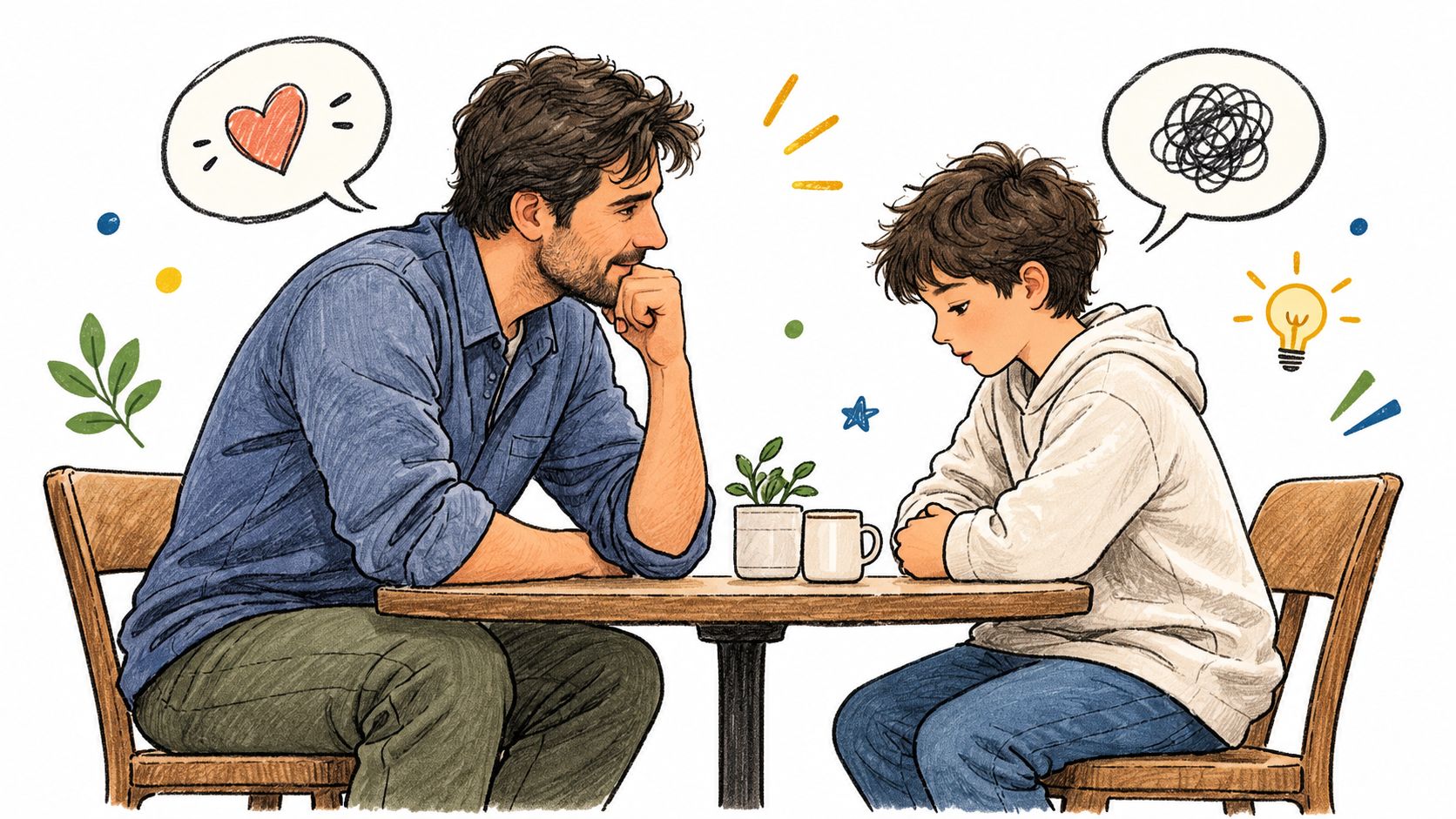
Try this sequence:
- Name the behavior. “The messages included insults about her appearance, and you posted them in a group where other students could see them.”
- Name the impact. “That exposed her to humiliation and made the group unsafe. It must stop.”
- Set the boundary. “You're not allowed to threaten, insult, exclude, share private material, or recruit other students to target someone.”
- Invite the account. “Tell me what happened from the beginning. What were you feeling, and what did you want to happen?”
- Find the payoff. Ask whether the child wanted laughs, status, control, revenge, relief from embarrassment, or escape from a difficult interaction.
- Create the replacement plan. Write down what the child will do next time, who they'll contact, and when adults will review progress.
The plan must use observable actions, not aspirations. “Be nicer” is too vague. “Leave the group chat without posting, save the message, and show it to the counselor” is actionable. “Tell an adult, ‘I'm getting angry and need help before I say something cruel’” gives the child a script to use under pressure.
The conversation shouldn't become a public performance. Don't label the child in front of siblings or peers, force an apology before safety is established, or arrange mediation when there's a power imbalance. An apology can become another opportunity for control or can pressure the harmed child to reassure the aggressor.
Parents who need support with consistent limits can also review strategies for reclaim peace with boundary tools, particularly when arguments at home become intense. For related guidance on predictable consequences and reinforcement, see behavior management strategies for parents.
The first conversation should end with a written agreement, not a promise. Include the prohibited behavior, replacement actions, adult contacts, digital boundaries, immediate consequences, and the date of the first review.
A short video can help families think about how to keep accountability connected to emotional support:
Four Reasons Kids Bully and Why It Changes Your Plan
Two children can produce the same harmful behavior for entirely different reasons. If one child is seeking an audience and another is escaping fear, giving both the same lecture about empathy misses the mechanism that needs to change.
Status and attention
A child may discover that insults, exclusion, or humiliating videos attract laughs and raise their position in a peer group. The intervention must make the audience less rewarding and build legitimate ways to gain connection. Ask the school to interrupt the performance quickly, avoid giving the behavior a dramatic public stage, and notice leadership, inclusion, and responsible humor when they occur.
Impulsivity and rapid escalation
Some children act before they can pause. They may understand afterward that the behavior was harmful, yet lose access to that understanding during teasing, frustration, or competition. Their plan needs early warning cues, physical space, a short exit phrase, and adult support before escalation. A child with attention, regulation, or processing difficulties may also need assessment and school accommodations rather than punishment alone.
Peer copying
A child may join in because refusing feels socially costly. In that case, rehearse a low-status escape that doesn't require a moral speech in front of friends: “I'm not doing this,” “Drop it,” or leave and report privately. The school should identify which peers and settings increase risk, while caregivers learn who is present in digital groups and gaming spaces.
Retaliation and self-protection
Some children bully after being mocked, excluded, threatened, or bullied themselves. Their experience may explain the behavior, but it doesn't excuse harming someone else. Safety planning must address the original victimization while teaching the child how to seek adult protection, preserve evidence, leave the encounter, and avoid retaliation.
A child can be both targeted and aggressive. Treating only one role leaves the other active. Ask school staff to document threats against your child as carefully as incidents involving your child, then coordinate separate safety and skill plans. Families looking at broader patterns can use guidance on child behavior problems while keeping the current plan focused on specific, measurable actions.
Practicing the Replacement Behavior Until It Sticks
A child may be able to explain the right response in your kitchen and still bully someone when friends are watching. Knowledge is not the same as performance under pressure. Replacement behaviors need repeated rehearsal in situations that resemble the actual incidents.
Start with the earliest cue. It may be a hot face, clenched hands, a friend saying “Send it,” a fear of looking weak, or the urge to answer immediately. Help the child name that cue, then pair it with one short action.
Build a rehearsal loop
- Spot the cue: Identify the moment before the insult, threat, exclusion, or post.
- Choose the exit: Practice walking away, muting the chat, handing over the phone, or moving toward a supervised space.
- Use a help script: Rehearse, “I'm angry and I need an adult before this gets worse.”
- Repair safely: The child can remove harmful content, tell an adult what was shared, and make a repair plan without demanding access to the harmed child.
- Review the result: Record whether the replacement happened, what made it difficult, and what support is needed next time.
Use role-play that becomes gradually more realistic. Begin with a calm parent acting as a peer, then add time pressure, an imagined audience, or a provocative comment. Stop the practice before it becomes overwhelming. Praise the exact behavior, such as, “You looked at the message, paused, and brought it to me instead of forwarding it.”
Reinforce change without creating dependence
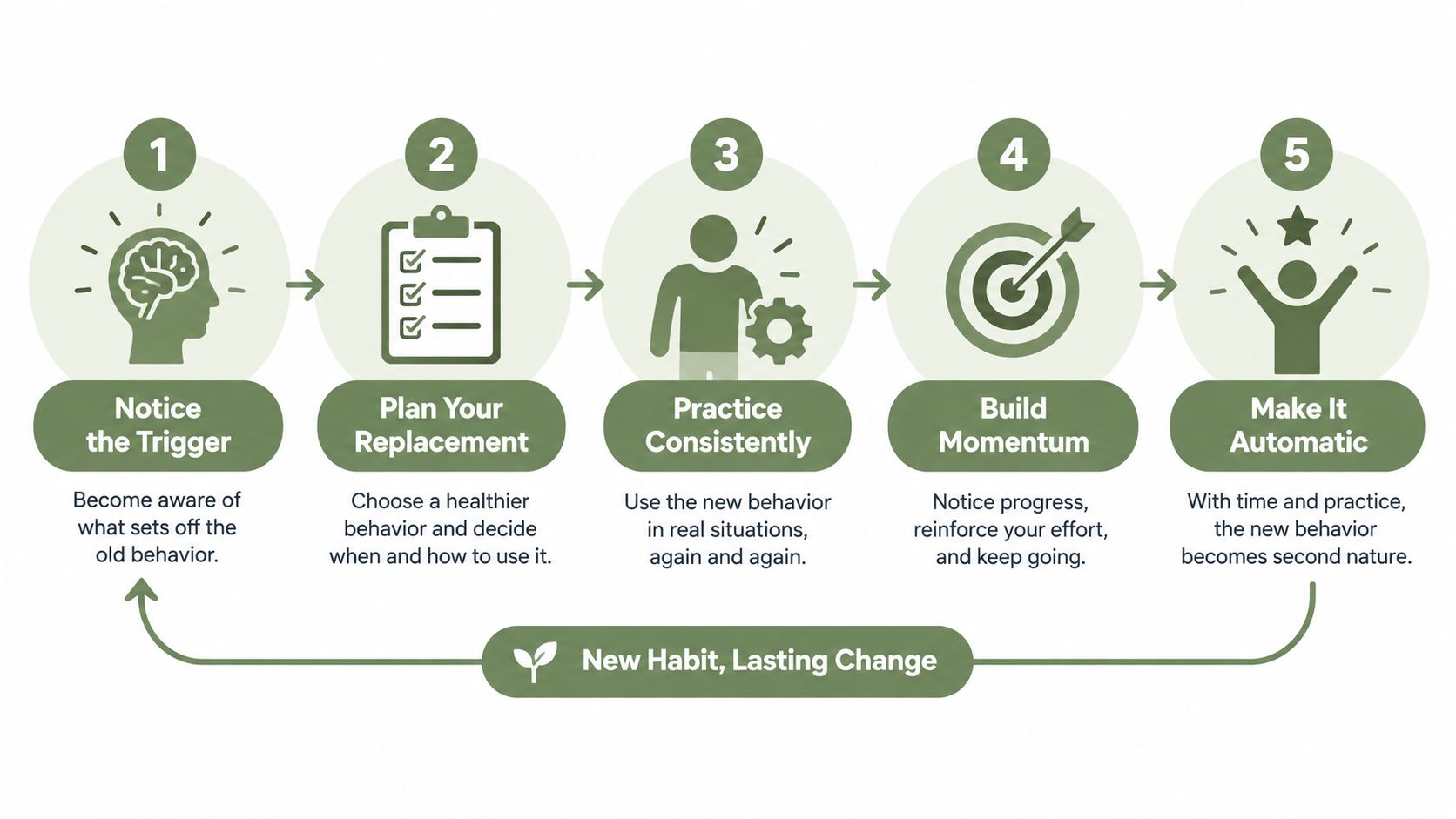
At first, reinforce every verified use of the replacement behavior immediately and specifically. The reward might be extra time with a preferred activity, a note home from a trusted teacher, or the child choosing a family activity. Avoid rewarding the absence of reports alone. A quiet day may mean improvement, concealment, or a change in setting.
Review a simple weekly sheet with the child. Track incidents, severity, location, target, replacement attempts, and bystander response. Once the child uses the skill reliably across settings, make reinforcement less frequent while keeping adult feedback and monitoring in place.
School-wide consistency matters. In one evaluation of the Olweus Bullying Prevention Program, reports of bullying others declined from 7.6% to 3.6% after 20 months, a 52.6% relative reduction, with effects retained at 24 months (evaluation of the Olweus program). The lesson for families isn't that one program guarantees the same result. It's that repeated practice, adult follow-through, and peer-environment changes have more staying power than a single conversation.
Coordinating With the School So the Plan Holds
A home agreement can fail by second period if the school doesn't know what to watch for or who owns each response. Ask for a written plan that identifies the high-risk locations, supervising adults, reporting route, consequences, replacement skills, and review dates.
Put ownership in writing
A useful school meeting ends with names and actions:
- Supervision: Identify who will monitor the bus line, bathroom corridor, cafeteria, playground, dismissal area, or online school spaces where incidents occur.
- Immediate response: Staff should stop the behavior, separate students when needed, document facts, and avoid public humiliation.
- Skill coaching: A consequence should be paired with practice. The child may rehearse leaving, asking for help, or responding to an audience.
- Family contact: Agree on who contacts you, what information will be shared, and how often progress will be reviewed.
- Data log: Use the same categories at home and school so you can compare frequency, severity, setting, and response.
Ask for a named staff contact rather than a general promise that “the school will keep an eye on it.” Request a short written summary after the meeting. If the school minimizes the issue, return to observable facts: dates, words, locations, witnesses, digital evidence, and the safety steps being requested. Keep communication calm and factual. Escalate through the school's established process when the response remains inconsistent or a child faces ongoing danger.
“Who will do what, in which setting, and by when?” is often more useful than asking whether everyone agrees the child needs to improve.
If aggression connects with ADHD, anxiety, trauma exposure, learning differences, or difficulty processing social cues, ask whether the existing educational plan addresses the behavior. You can request that the team examine supervision, transition support, check-ins, social problem-solving instruction, and data collection. School accommodations don't remove responsibility. They make it more likely that the child can meet the expectation.
Digital behavior needs its own agreement. Define what happens with group chats, gaming voice channels, private messages, screenshots, and account access. Preserve evidence and report serious threats or coercion through the appropriate school, platform, or emergency channels. Don't assume that removing the phone permanently teaches the child how to use technology safely.
When to Get Professional Help and Your 90-Day Plan
Home and school intervention is appropriate for many situations, but it isn't enough when risk is rising or the pattern persists. Arrange a professional assessment for persistent aggression, threats, coercive control, severe remorse or distress, school refusal, sleep disruption, depression, or self-harm concerns. Immediate danger, serious violence, or credible self-harm risk requires urgent local support rather than waiting for a routine appointment.
A clinician can assess whether the behavior connects with impulsivity, anxiety, trauma, depression, conduct problems, peer reinforcement, or the possibility that the child is both targeting and being targeted. Parent coaching and individual therapy can work alongside school supervision. Families seeking treatment options can browse our online counselling services and should also consider practical factors such as licensing, developmental experience, family involvement, and coordination with school.
Days 1 through 30
Establish the baseline, stop immediate harm, and complete the accountability conversation. Create the replacement plan, set digital limits, identify adult contacts, and begin weekly tracking. The first milestone isn't a perfect child. It's reliable adult responses and a clear record of what happens before and after incidents.
Days 31 through 60
Increase practice in the settings where behavior occurs. Ask the school for a progress review, compare home and school records, and adjust the plan if the behavior has shifted online or into a new peer group. Reinforce verified use of the replacement skill and address setbacks without treating them as proof that change is impossible.
Days 61 through 90
Review whether incidents have decreased in frequency and severity, whether the child uses replacement behaviors without immediate prompting, whether digital conduct is safer, and whether relationships are being repaired appropriately. If progress is limited, request a fuller clinical assessment and revisit the function of the behavior instead of only increasing punishment.
Research supports persistence without promising a uniform outcome. A large meta-analysis found small overall effects for bullying outcomes, with an effect size of −0.150, and mental-health outcomes, with an effect size of −0.205 (meta-analysis of anti-bullying interventions). That pattern is consistent with what families often experience: meaningful gains can be uneven, and durable change depends on practiced skills, coordinated adults, and follow-up across settings.
For help evaluating a child therapist and matching care to your family's needs, review how to choose a therapist for your child. A clinician should be able to explain how they'll measure progress, involve caregivers, respond to school concerns, and address safety without reducing your child to a label.
---
Wald Behavioral Health provides evidence-based therapy, parent guidance, and family support for children and adolescents experiencing bullying-related behavior, anger, aggression, anxiety, or school stress. If you need help building a coordinated plan across home, school, and digital life, contact Wald Behavioral Health to discuss a free 15-minute consultation.
Questions about your child or teen?
Dr. Wald offers a free 15 minute consultation to talk through what you are seeing and whether the practice is a good fit.
Free 15 Minute Consultation