What Is a Pediatric Psychologist and How Can They Help
A pediatric psychologist is a licensed psychologist with specialized graduate training and supervised experience in child development, family systems, and the behavioral side of pediatric medical care, who provides therapy and assessment for children, adolescents, and young adults. In practical terms, this specialist helps families understand how emotions, behavior, development, school demands, and physical health are affecting one another.
You may be asking after noticing a pattern that doesn't fit neatly into one category. Your six-year-old complains of stomachaches before school, sleeps poorly, and becomes distressed when you mention the pediatrician. A medical evaluation matters, but you may also wonder whether anxiety, family stress, or school avoidance is keeping the problem going. That overlap is where pediatric psychology becomes especially useful.
## Table of Contents - Defining Pediatric Psychology as a Recognized Specialty - The working definition parents need - Training and Credentials Behind the Title - A layered route into pediatric care - Why the preparation matters - Common Issues Treated Across Ages and Stages - Emotional concerns and anxiety - Behavior, attention, and sleep - Medical adjustment and health behavior - How Pediatric Psychologists Differ From Other Providers - What a Course of Therapy Actually Looks Like - From intake to a working plan - Accessing Care In Person and Through Telehealth - Deciding Whether to Reach Out and What Comes Next
Defining Pediatric Psychology as a Recognized Specialty
Pediatric psychology is a recognized clinical specialty, not a friendly label for any professional who works with children. It sits at the meeting point of psychology, pediatric medicine, developmental science, and family systems. A pediatric psychologist assesses and treats emotional and behavioral concerns while considering how illness, injury, medical procedures, health habits, relationships, and the child's developmental stage shape the problem.
The field's history reflects that focused role. The term “pediatric psychology” was coined in 1967, and the specialty was formally organized in 1968 when the Society of Pediatric Psychology was established within the American Psychological Association. It later became APA Division 54 in 2000, according to this historical account of pediatric psychology's development as a specialty.
The working definition parents need
A useful definition is this: a pediatric psychologist is a licensed psychologist with specialized graduate training and supervised experience in child development, family systems, and the behavioral side of pediatric care, who provides therapy and assessment for children, adolescents, and young adults.
That definition explains why the provider may work in a children's hospital, specialty clinic, primary-care setting, private practice, or school-connected service. The psychologist may help with anxiety or depression, but may also address treatment adherence, pain coping, sleep, feeding, school functioning, procedural distress, or adjustment to a chronic condition.
Practical rule: If your child's emotional or behavioral difficulty is connected to health, development, family routines, or school participation, pediatric psychology may be relevant even without a single clear psychiatric diagnosis.
The specialty is also multidisciplinary. Pediatric psychologists commonly coordinate, when appropriate, with pediatricians, nurses, psychiatrists, occupational therapists, teachers, and caregivers. The Society of Pediatric Psychology's professional overview describes work involving psychosocial, developmental, and contextual factors that influence pediatric medical conditions, health behavior, adherence, and health promotion.
That broader lens is often what families need next. The practical questions usually concern training, the kinds of problems treated, the difference between providers, and how to find care that fits the child's age and circumstances.
Training and Credentials Behind the Title
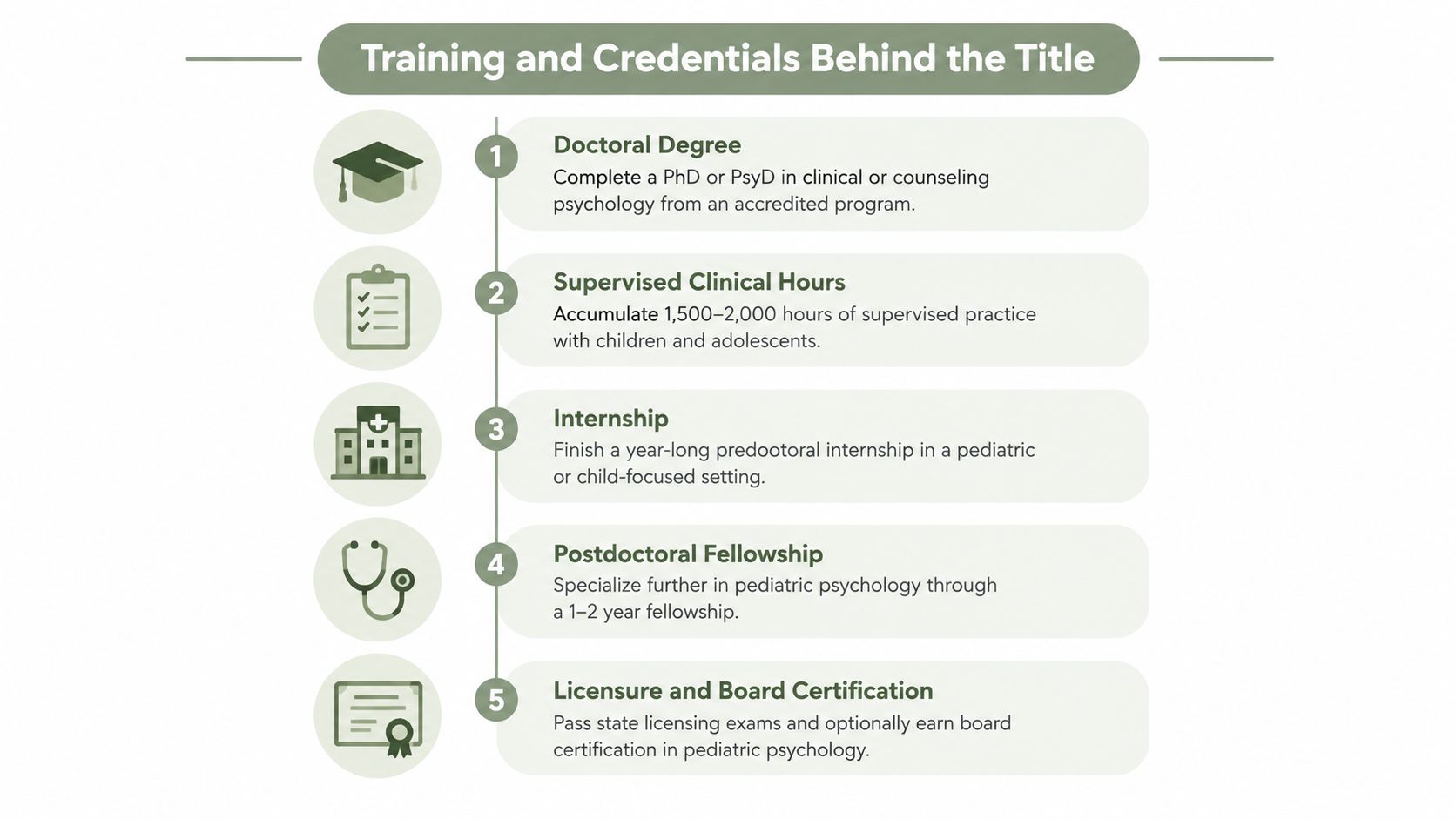
The title carries meaning because pediatric psychologists build competence in layers. Requirements vary by jurisdiction, so parents should verify a clinician's license with the relevant state or provincial board. Still, the typical pathway involves doctoral education, supervised clinical work, specialized pediatric experience, and legal authorization to practice independently.
A layered route into pediatric care
- Doctoral education. Most pediatric psychologists earn a PhD or PsyD in clinical or counseling psychology. Their programs cover psychological assessment, psychotherapy, ethics, research, child development, psychopathology, and family systems. Accredited programs may be recognized by organizations such as the American Psychological Association or the Canadian Psychological Association.
- Clinical supervision. Graduate students practice under supervision with children, adolescents, families, and sometimes medically involved patients. They learn how to conduct interviews, use behavioral and psychological assessments, design treatment plans, communicate with caregivers, and coordinate with other professionals.
- Predoctoral internship. A formal supervised internship provides concentrated clinical experience. Future pediatric specialists may train in children's hospitals, outpatient clinics, community agencies, schools, or other settings serving young people.
- Postdoctoral specialization. Many clinicians pursue advanced training in pediatric psychology through a fellowship connected to a children's hospital, developmental clinic, or academic medical center. This experience deepens skills in medical adjustment, adherence, procedural preparation, behavioral medicine, and consultation with health teams.
- Licensure and optional specialty certification. State or provincial licensure is the legal floor for independent psychological practice. Board certification through the American Board of Pediatric and Adolescent Psychology can serve as an additional marker of specialty competence, though it isn't required for every pediatric psychologist.
Why the preparation matters
A child's symptoms rarely arrive in separate compartments. A child with diabetes may avoid injections, miss school, and argue with caregivers about routines. A teenager with chronic pain may withdraw from friends, sleep at unusual times, and fall behind academically. Pediatric psychology training prepares the clinician to consider medical, emotional, behavioral, developmental, and family variables together.
That training differs from a master's-level counseling program, a school psychology credential, or medical training in psychiatry. Those roles can be highly valuable, but they don't represent the same educational route or scope of practice. Families can learn more about one practice's clinical background through Wald Behavioral Health's professional information.
For a broad professional overview of how child-focused psychology careers differ, the Husson University guide to child psychology careers offers useful background. The key question isn't whether one provider is universally better. It's whether the clinician's training matches the child's needs.
Common Issues Treated Across Ages and Stages
Pediatric psychologists address a wide range of concerns, but they don't use one identical treatment plan for every child. A preschooler may need parent coaching and play-based practice, while a teenager may participate in structured cognitive behavioral therapy and take more responsibility for tracking thoughts, routines, or coping skills.
Emotional concerns and anxiety
Anxiety can appear as repeated reassurance-seeking, stomachaches, crying at separation, fear of social situations, avoidance of school, or distress around specific objects and situations. Treatment may include cognitive behavioral strategies, exposure-based work, relaxation practice, and parent coaching. For obsessive-compulsive symptoms, the psychologist may help the child and caregivers respond differently to intrusive thoughts and rituals rather than repeatedly accommodating them.
Mood concerns can look different across development. Younger children may become irritable, clingy, withdrawn, or less interested in play. Older children and adolescents may describe sadness, hopelessness, low motivation, or loss of connection with friends. A psychologist may also help with adjustment after divorce, a move, bereavement, family conflict, or another major change.
Behavior, attention, and sleep
Pediatric psychologists may assess and treat ADHD-related difficulties, impulsivity, tantrums, oppositional behavior, and problems with emotional regulation. Parent training often becomes part of care because children need consistent responses across daily routines, not only insight during an appointment.
Sleep problems also deserve attention. Bedtime resistance, frequent nighttime reassurance, nightmares, delayed sleep, and adolescent insomnia can affect mood, attention, learning, and family relationships. Treatment may focus on predictable routines, gradual behavior change, caregiver responses, and identifying worries that become louder at night.
Medical adjustment and health behavior
The specialty becomes particularly distinct when a medical issue is part of the picture. A pediatric psychologist may help with needle fear, preparation for a procedure, coping with pain, feeding challenges, adherence to treatment, somatic symptoms without a clear medical explanation, or emotional adjustment to an acute or chronic condition.
The larger context matters. In a large 2026 child mental-health analysis, 28.3% of children had at least one chronic condition, 14.9% screened positive for at least one mental illness, and 6.0% had multimorbidity, meaning more than one health condition occurred together. These figures are reported in the analysis of chronic conditions and mental illness in children. They help explain why psychological care sometimes needs to sit alongside pediatric and specialty medical care.
| Concern Category | Typical Ages | Treatment Approach | |---|---|---| | Anxiety, separation, phobias, and school refusal | Early childhood through adolescence | Parent coaching, coping skills, cognitive behavioral therapy, and gradual exposure | | OCD and intrusive thoughts | School age through young adulthood | Exposure-based treatment, response prevention, family guidance, and skills for tolerating uncertainty | | Depression, irritability, and adjustment | School age through young adulthood | Mood monitoring, behavioral activation, emotion regulation, family work, and problem solving | | ADHD, impulsivity, and oppositional behavior | Early childhood through adolescence | Behavioral assessment, parent training, routines, reinforcement plans, and school coordination | | Sleep difficulties | Toddlers through adolescents | Consistent routines, behavioral strategies, caregiver coaching, and anxiety-focused work when needed | | Medical adjustment, procedures, pain, and adherence | Infancy through young adulthood | Preparation, coping practice, behavior plans, family support, and coordination with medical teams |
The same diagnosis can require different therapy formats at different ages. A toddler's treatment may happen mostly through caregivers, a school-age child may use games and drawing to practice skills, and a teen may need privacy, collaboration, and direct preparation for managing health responsibilities.
How Pediatric Psychologists Differ From Other Providers
Families often hear “psychologist,” “therapist,” “psychiatrist,” and “school psychologist” used as though the titles mean the same thing. They don't. The right choice depends on whether the main need is therapy, medication, learning assessment, school intervention, family coaching, medical adjustment, or some combination.
A pediatric psychologist is generally a doctoral-level licensed psychologist with focused training in child development, behavioral assessment, and evidence-based therapy. This clinician can diagnose psychological conditions such as anxiety, ADHD, and mood disorders, depending on the evaluation and jurisdiction, but doesn't prescribe medication.
A child psychiatrist is a physician with an MD or DO who completes medical training and psychiatric specialization. Psychiatry commonly emphasizes diagnostic evaluation, medication decisions, and monitoring of medical factors. A psychiatrist may provide therapy, but many families pair psychiatric care with a psychologist or therapist for regular behavioral and family-based treatment.
“Child therapist” is a broad category. It may include a licensed professional counselor, clinical social worker, marriage and family therapist, or another master's-level clinician. These professionals can provide valuable therapy, but their pediatric experience, assessment authority, medical training, and scope vary by person and license.
A school psychologist works primarily within the education system. School psychologists conduct psychoeducational evaluations, support learning and behavior plans, consult with teachers and families, and contribute to IEP or 504 processes. They usually aren't the provider for ongoing outpatient clinical therapy.
| Provider | Degree and Training | Prescribes Medication | Typical Role | Best Fit For | |---|---|---:|---|---| | Pediatric psychologist | Doctoral psychology degree, supervised clinical training, pediatric specialization, and licensure | No | Assessment, therapy, parent guidance, behavioral medicine, and care coordination | Concerns involving development, emotions, behavior, family routines, school, or medical conditions | | Child psychiatrist | Medical degree, psychiatric training, and child-focused specialization | Yes | Diagnostic evaluation, medication management, and medical monitoring | Significant symptoms requiring medication consideration or complex psychiatric evaluation | | Child therapist | Often a master's degree with supervised clinical practice and licensure | No | Talk therapy, play therapy, family therapy, or behavior support | Emotional, behavioral, family, or adjustment concerns suited to the clinician's expertise | | School psychologist | Graduate training in school psychology and school-system credentialing | No | Learning and behavior assessment, consultation, and educational planning | IEP, 504, classroom, learning, and school-based intervention needs |
A pediatrician can also be an important starting point, particularly when physical symptoms, medication effects, sleep, pain, or developmental concerns need medical review. The providers may work as a team rather than compete for the same role.
What a Course of Therapy Actually Looks Like
The first contact is usually practical. A parent describes the concern, asks whether the psychologist treats that age group, discusses scheduling and payment, and learns whether the problem fits the clinician's services. A short consultation can prevent families from spending time with a provider whose training or availability doesn't match their needs.
From intake to a working plan
The first formal appointment often gathers a detailed developmental, medical, family, and school history. The psychologist may speak with caregivers and the child separately or together, review prior evaluations, and use standardized rating scales when they add useful information. The purpose isn't to attach a label quickly. It's to understand what happens before, during, and after the difficulty.
Next, the psychologist explains a working formulation in plain language. This is a shared explanation of what may be maintaining the problem and where treatment can help. Goals might include returning to school more consistently, sleeping independently, reducing compulsive rituals, following a medical routine, or building skills for intrusive worries.
Sessions may combine child-directed activities, drawing, role-play, cognitive behavioral exercises, exposure practice, and parent coaching. Some appointments include the child and caregiver together, while others give the child private space or focus directly on caregiver strategies. Progress is reviewed through observations and feedback from the child, parents, and, when appropriate, teachers or medical professionals.
For a practical example, consider Maya, an eight-year-old who became unable to sleep during thunderstorms. Her psychologist might first map the fear cycle, identify the reassurance and avoidance patterns that keep it active, teach calming and thinking skills, and create a gradual bravery plan. Maya could practice tolerating increasingly small parts of the storm routine while her parent responds consistently instead of removing every reminder of the feared event.
That work would be adjusted if Maya were a toddler or teenager. The child's developmental level determines how abstract the conversation can be, how much the parent participates, and which practice exercises make sense. Families looking for a related service can review this explanation of behavioral therapy for kids.
Therapy may be weekly at first and less frequent as skills become established. The endpoint isn't always “nothing is ever difficult again.” It's often a child and family who can recognize the pattern, use effective responses, and recover more confidently when stress returns.
Accessing Care In Person and Through Telehealth
In-person and telehealth care can both be appropriate. The better format depends on the child's age, the purpose of the appointment, privacy at home, clinician availability, insurance rules, and whether direct observation is important.
In-person sessions give the psychologist a dedicated setting for observing play, transitions, parent-child interaction, and behavior. Younger children may engage more naturally with toys, drawing materials, or movement-based activities in an office. An in-person evaluation may also be preferable when the clinician needs observations that are difficult to reproduce through a screen.
Telehealth changes the equation for families who live far from specialists, have demanding work schedules, or prefer care at home. Some adolescents speak more openly from a familiar room, while some younger children participate well when a caregiver prepares the space and stays nearby. Secure video care can also make continuity easier when a family moves or has difficulty traveling.
The PSYPACT interstate compact allows licensed psychologists to practice across more than 40 participating states, broadening access for eligible families who relocate or seek care across state lines. Families should still confirm whether the specific clinician is authorized to provide services in their location and whether the appointment type is permitted.
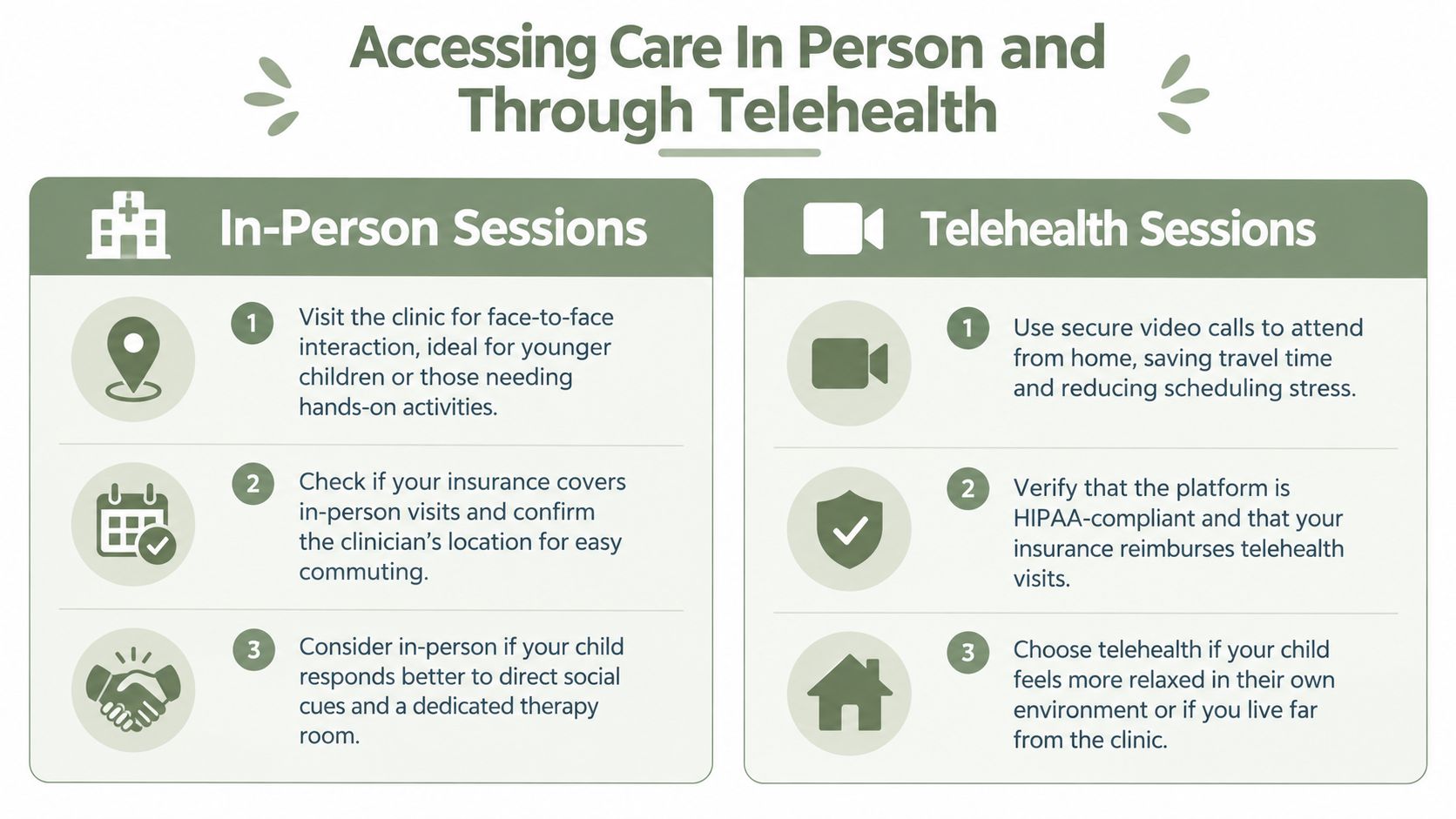
Before choosing telehealth, ask about the platform, privacy, payment, emergency procedures, and caregiver participation. Telehealth services may be a useful option when travel or scheduling makes office visits difficult.
Before the first video visit: Test the device, choose a private space, keep water and a few comfort or fidget items nearby, and explain the appointment in language your child understands.
Parents can also ask whether virtual sessions are reimbursed under their plan in the same way as in-person visits. A quiet room isn't always necessary, but the child needs enough privacy to speak and enough support to reconnect with a caregiver if emotions rise.
Deciding Whether to Reach Out and What Comes Next
Parents commonly hesitate because they aren't sure the problem is serious enough, worry about cost, feel concerned about stigma, or expect a long wait. You don't need a perfect diagnosis before calling. A consultation is a way to describe what you're seeing and learn whether pediatric psychology, primary care, school support, psychiatry, or another service is the appropriate next step.
Consider reaching out when:
- Daily life is changing: Worry, sadness, anger, avoidance, or medical distress is affecting home, school, sleep, friendships, or treatment routines.
- The pattern is persistent: The concern has continued, is worsening, or hasn't improved with reasonable support at home.
- A medical event changed behavior: Your child has become fearful, withdrawn, oppositional, or unusually distressed after illness, injury, hospitalization, or a procedure.
- School participation is slipping: Refusal, panic, inattention, learning difficulties, or peer problems are interfering with attendance or performance.
- Family conflict is stuck: Repeated arguments around bedtime, medication, food, homework, or limits continue despite consistent efforts.
- Your pediatrician recommends help: A medical provider may identify when psychological assessment or treatment should be added to physical care.
Prepare for the first call by writing down recent examples, when the difficulty occurs, what makes it better or worse, current medications or medical conditions, school reports, and previous evaluations. Have insurance information available, but don't assume you must have every document before asking questions.
A pediatric psychologist can help clarify whether the first step should be parent coaching, individual therapy, a school evaluation, psychiatric consultation, medical follow-up, or coordinated care. Earlier support may keep a manageable problem from becoming more disruptive, and telehealth can make specialty care more reachable for families in rural areas or with limited scheduling flexibility.
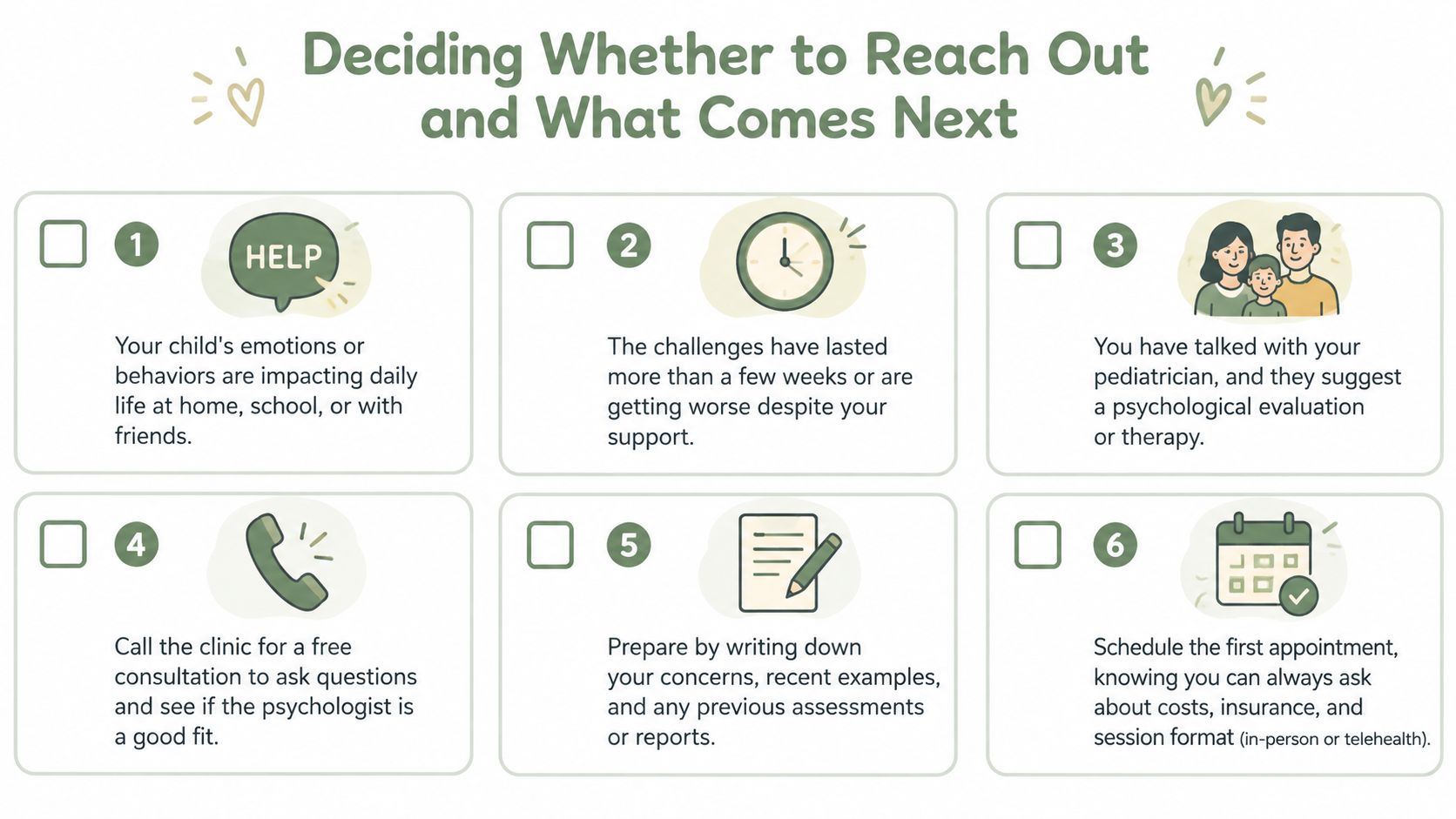
You aren't committing to long-term treatment by making a call. You're gathering information, checking fit, and giving your family another informed option.
---
Wald Behavioral Health provides evidence-based therapy, parent guidance, and telehealth for children, adolescents, young adults, and families dealing with concerns such as anxiety, ADHD, OCD, sleep difficulties, mood concerns, behavioral challenges, and adjustment to pediatric medical conditions. Visit Wald Behavioral Health to request a free 15-minute consultation and discuss fit, scheduling, and in-person or virtual care.
Questions about your child or teen?
Dr. Wald offers a free 15 minute consultation to talk through what you are seeing and whether the practice is a good fit.
Free 15 Minute Consultation