Behavioral Therapy Methods for Kids: What Works
A parent notices the pattern before anyone else does. Bedtime stretches into an hour of negotiation, a child suddenly complains of stomachaches on school mornings, or a teenager spends so long checking a door that the family is late again. You may have tried reassurance, stricter rules, rewards, or waiting for the phase to pass. Sometimes those efforts help. Sometimes the pattern becomes more entrenched.
Behavioral therapy methods give families a practical way to understand what keeps a problem going and what new behavior can replace it. The right approach depends on the concern. Anxiety may call for cognitive behavioral therapy with carefully planned exposure, OCD often requires exposure and response prevention, and ADHD-related behavior problems may respond to structured parent training. The common thread is active practice, observable goals, and support that continues beyond the therapy room.
## Table of Contents - Recognizing When Behavioral Therapy Can Help - A pattern matters more than a single difficult day - Understanding Cognitive Behavioral Therapy for Children - What a child learns in CBT - How Exposure Therapy Addresses OCD and Anxiety - Why the method requires careful planning - Parent Training and Behavior Management Techniques - A plan parents can use - Choosing Between In-Person and Telehealth Therapy - Match the format to the treatment task - Real Examples of Behavioral Therapy in Family Settings - The same principles look different by age - Common Barriers to Treatment Access and Completion - Protect the active ingredients - Moving Forward with Evidence-Based Behavioral Support
Recognizing When Behavioral Therapy Can Help
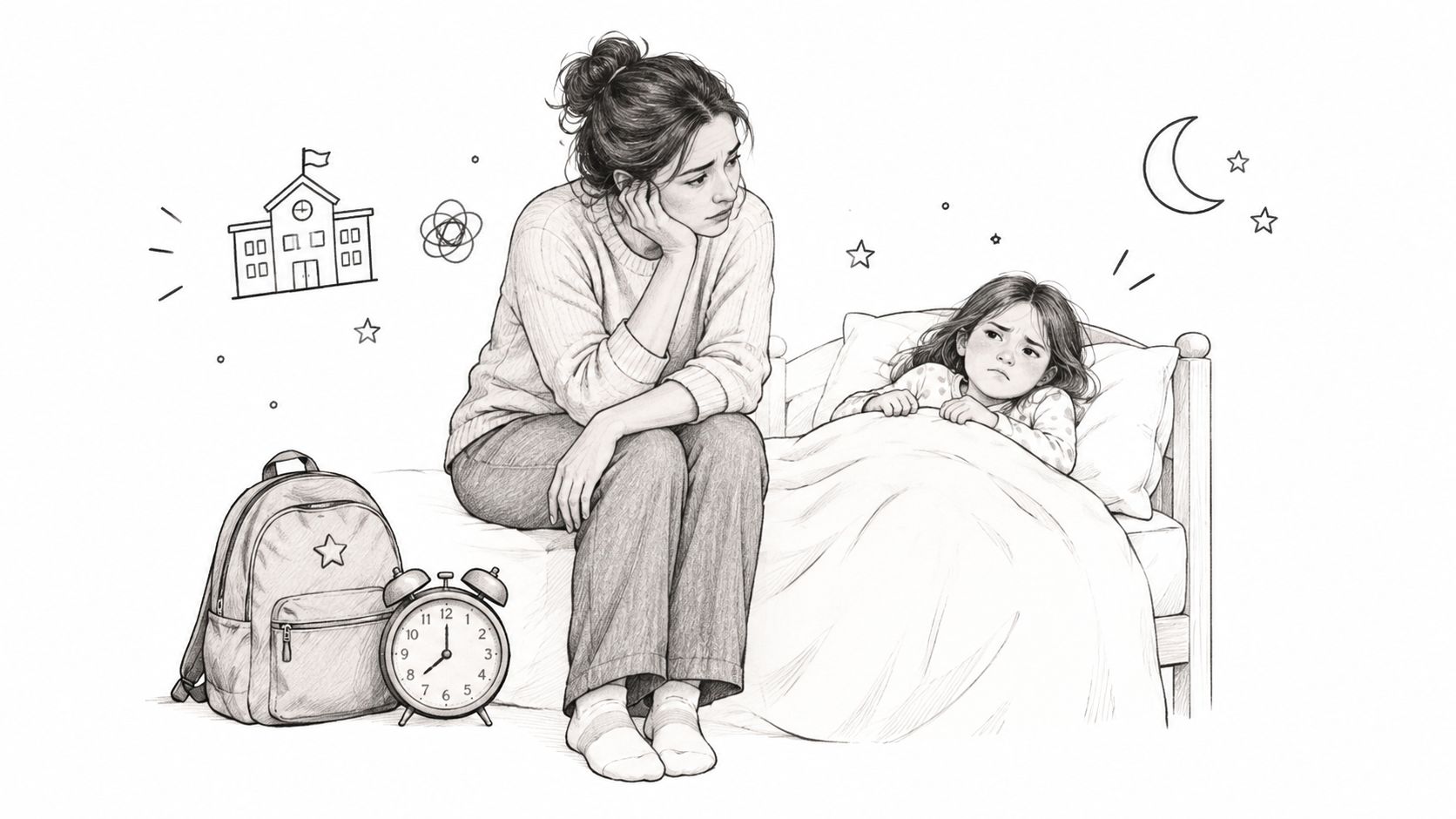
Maya's mother first became concerned when her seven-year-old started asking whether she could stay home from school. At night, Maya needed repeated reassurance about being away from her parents. In the morning, she complained of feeling sick, moved slowly through dressing, and sometimes cried at the classroom door. Nothing had changed dramatically at home, but worry was beginning to control the family's routine.
A behavioral therapist wouldn't just tell Maya to “calm down.” The therapist would look at what happened before the distress, what Maya did next, and how adults responded. If staying home reliably removed the feared situation, avoidance could become stronger. If repeated reassurance briefly reduced worry, Maya might learn to seek reassurance each time anxiety appeared.
A pattern matters more than a single difficult day
Behavioral therapy becomes especially useful when a behavior is persistent, disruptive, or spreading to other settings. A child may avoid school, lose sleep, stop attending activities, or rely on a parent to complete ordinary tasks. A child with ADHD may struggle with transitions, following directions, or waiting, while a child with OCD may lose time to rituals or involve the family in repeated checking.
The approach also differs from general parenting advice. Parent training defines a target behavior in observable terms, changes the conditions around it, and uses reinforcement or predictable consequences to shape what happens next. Treatment isn't a judgment about parenting. It's a structured plan for changing a learned pattern.
Practical rule: Seek an evaluation when a child's behavior repeatedly limits school, sleep, friendships, family routines, or age-appropriate independence.
A clinician will consider developmental stage, learning needs, medical factors, family stress, and the child's own explanation of the problem. Families don't need to identify the perfect therapy before the first appointment. They do need to describe specific examples, such as how often a child refuses school, how long bedtime takes, or what happens immediately before a tantrum.
Understanding Cognitive Behavioral Therapy for Children
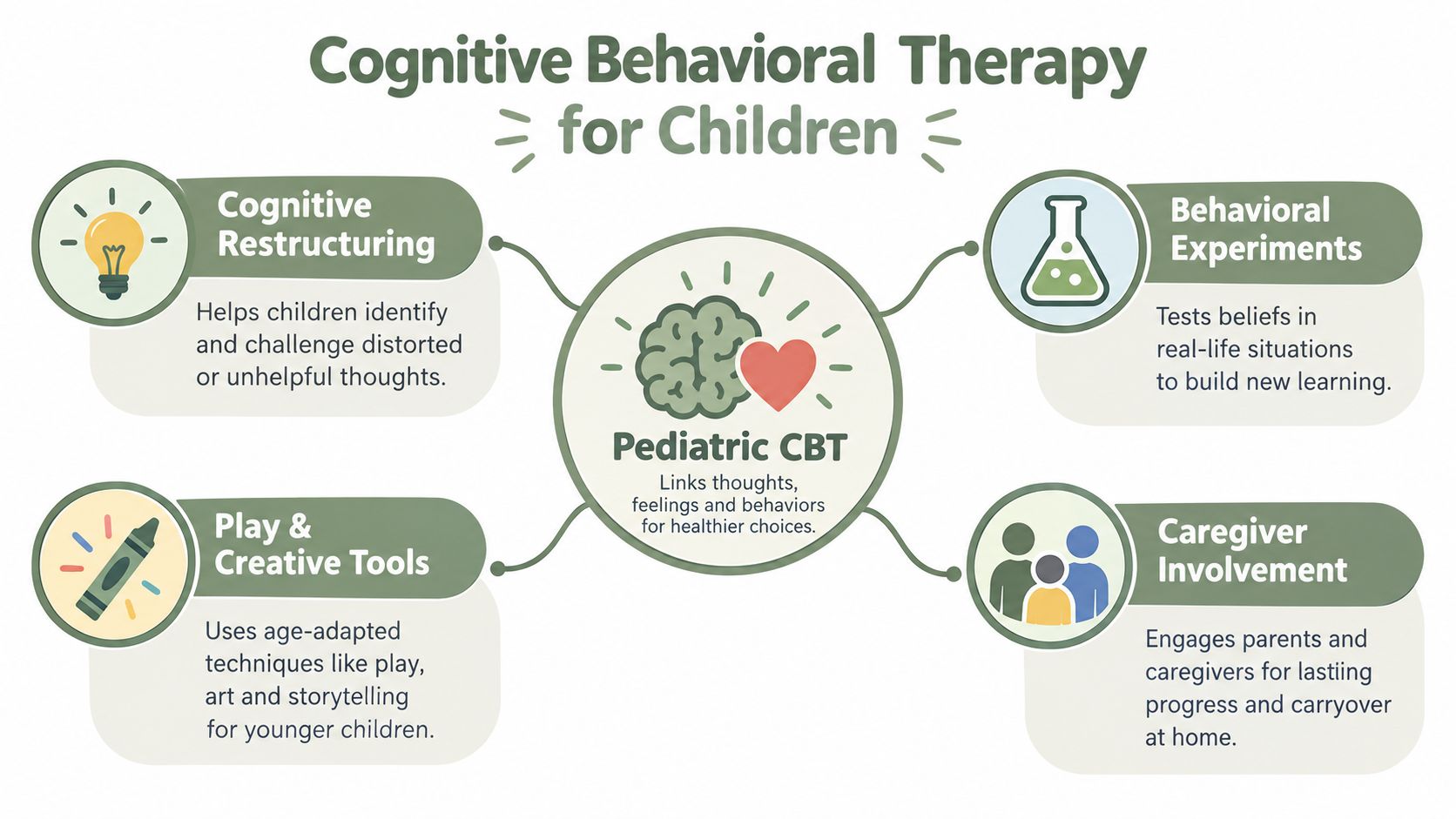
Cognitive behavioral therapy, or CBT, links thoughts, feelings, and actions. With children, the work is concrete and active. A therapist may use drawings, stories, games, role-play, feeling scales, and real-life experiments rather than relying on abstract discussion.
CBT is one of the most extensively evaluated behavioral therapy methods for childhood and adolescent anxiety. A Cochrane review of 41 studies involving 1,806 young participants found that 58.9% of participants receiving CBT achieved remission from at least one anxiety diagnosis, compared with 16.0% in control conditions. The review estimated an odds ratio of 7.85, with a 95% confidence interval of 5.31 to 11.60, and a number needed to treat of approximately 3.0. These figures describe group findings, not a guaranteed result for an individual child. The Cochrane review also supports adapting treatment to children's developmental needs.
What a child learns in CBT
Suppose an eight-year-old believes, “If I answer in class, everyone will laugh.” The therapist might help the child identify the prediction, look for evidence, and test it in a manageable way. The first practice could involve raising a hand to answer a question the child already knows. Later practices might involve speaking to a small group or asking a teacher for help.
The behavioral part is essential. A child doesn't overcome school anxiety by thinking about school from the safety of home. The child practices approaching school-related situations while the therapist and caregivers reduce avoidance and reinforce brave, flexible behavior.
A typical plan may include:
- Define the target. The family records when anxiety appears and what the child avoids.
- Build a graded hierarchy. The therapist arranges feared situations from easier to harder.
- Practice repeatedly. The child approaches one step and stays engaged instead of escaping.
- Carry skills into daily life. Parents and teachers support practice at home and school.
A meta-analysis of 75 studies found that greater in-session exposure was associated with larger CBT effects compared with waitlist controls, with effect-size improvements of approximately 0.12 to 0.15 across informants. It also found smaller pre-to-post effects in protocols that included relaxation strategies than in protocols omitting relaxation, with differences ranging from approximately 0.38 to 0.80 across reporters. The meta-analysis on exposure in youth anxiety CBT suggests that relaxation can support participation, but shouldn't become a safety behavior that lets a child escape the exercise.
How Exposure Therapy Addresses OCD and Anxiety
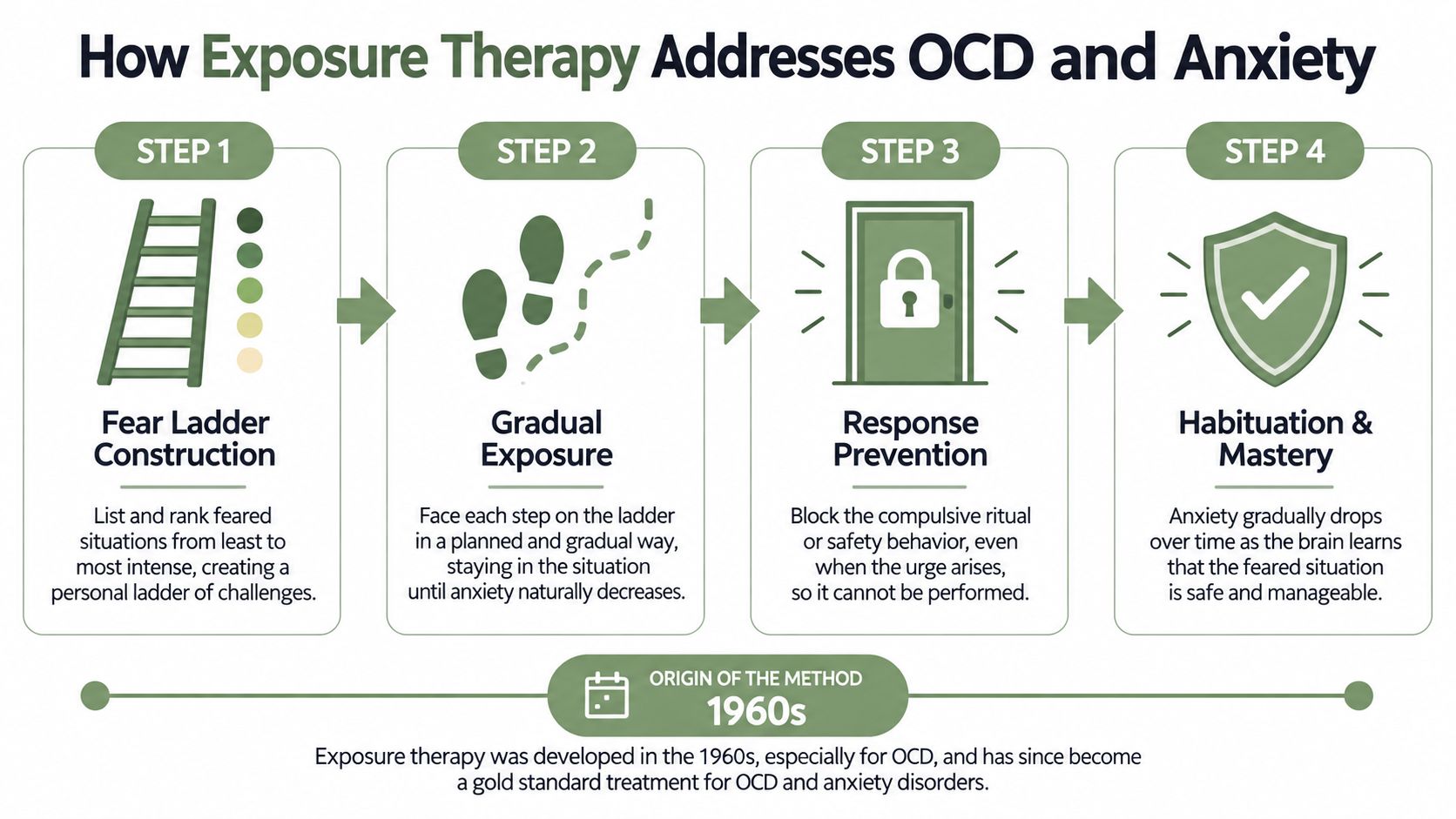
A child who fears contamination may wash their hands repeatedly, ask parents for reassurance, or avoid shared objects. Exposure and response prevention, usually called ERP, is a specialized CBT method for OCD. It helps the child approach a feared thought, object, situation, or sensation while resisting the compulsion or mental ritual that usually brings short-term relief.
Treatment begins at a tolerable level. The child might touch a relatively manageable object and wait before washing. The therapist then builds a fear ladder, moving toward harder situations as the child practices staying engaged. The goal is not to force the most frightening exercise immediately. It is to help the child learn, through repeated supported practice, that anxiety can rise and fall without a ritual.
Reassurance can become part of the cycle. If a parent repeatedly says, “I promise nothing bad will happen,” the child may learn that reassurance is required before they can cope. ERP gradually changes that pattern. Parents respond with empathy while avoiding promises of certainty or participation in the ritual.
Why the method requires careful planning
ERP emerged as a specialized CBT approach for OCD during the 1960s, applying learning principles in a structured treatment protocol. Estimates summarized by the American Psychological Association's overview of OCD treatment indicate that approximately 65% to 80% of patients respond well to ERP. That range describes groups, not an individual child. Severity, co-occurring conditions, participation between sessions, therapist expertise, and the exposure hierarchy can all affect results.
The plan should match the child's age and daily setting. A young child may work with pictures, play, simple language, and caregiver coaching. An adolescent might leave a message imperfectly written, tolerate uncertainty about homework, or delay a ritual. At home, parents may need to stop accommodating compulsions, but a clinician should guide that change gradually.
Before treatment starts, families can ask what the target ritual is, including mental reviewing, reassurance seeking, and family accommodation. They can also ask which exposure is manageable and safe, how progress will be measured through rituals, school attendance, avoided activities, and independent functioning, and what brief caregiver responses will validate distress without completing the ritual.
For developmental examples, families can read about exposure therapy for children. A qualified clinician should design ERP when symptoms are severe, involve fears of self-harm, or occur with depression or other significant concerns.
Parent Training and Behavior Management Techniques
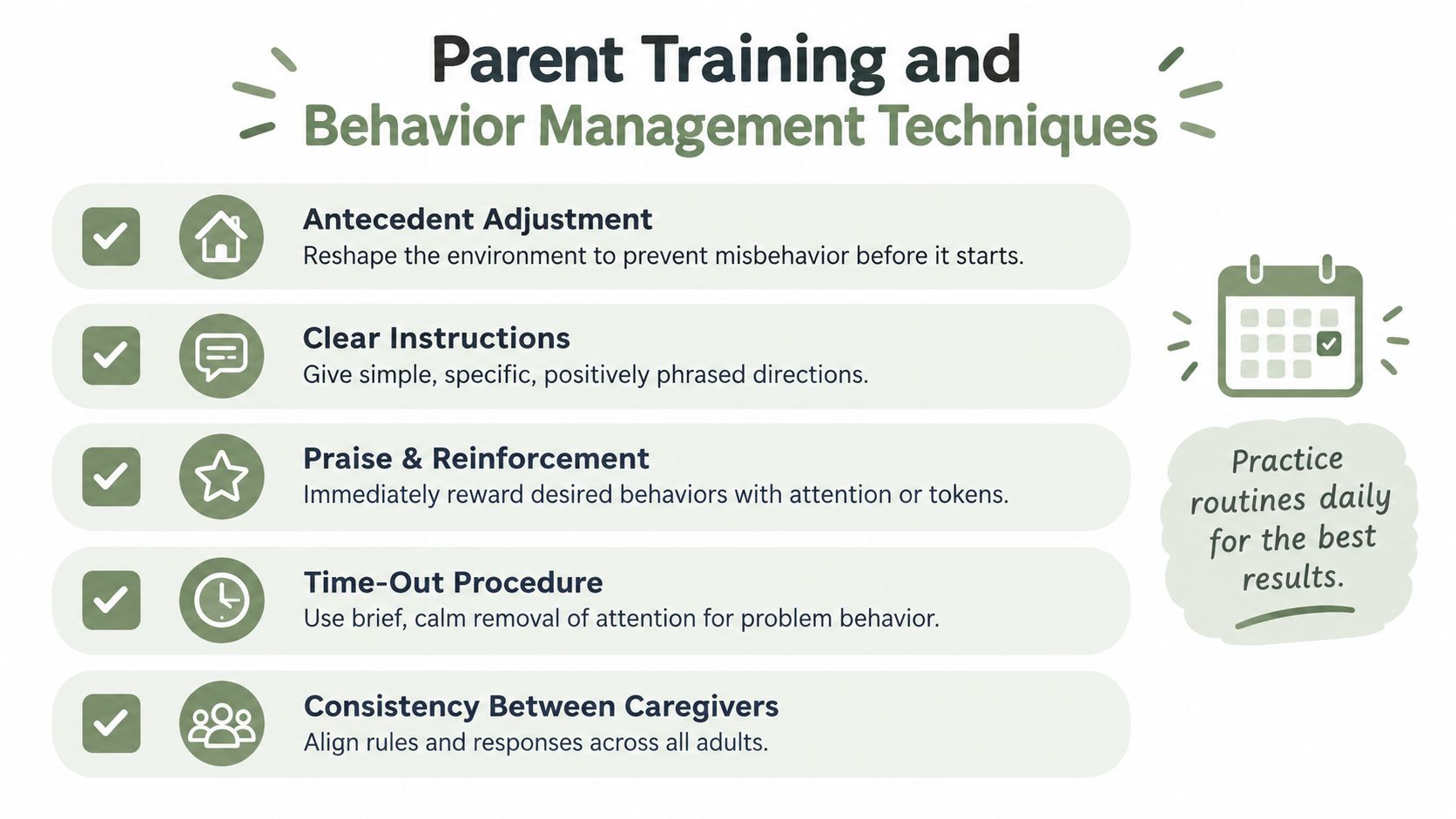
Parent training is a structured intervention that changes antecedents, consequences, and reinforcement, with the clinician and parent examining what happens before a behavior, defining it clearly, and adjusting the response that follows.
Suppose a family says, “Bedtime is difficult.” That description is too broad to guide treatment. A measurable target might be, “After the lights-out instruction, the child leaves the bedroom repeatedly.” The plan can then adjust the bedtime sequence, give one brief direction, praise staying in bed, and respond predictably when the child leaves.
The American Academy of Family Physicians summary of behavioral interventions for ADHD describes parent training as a strongly recommended evidence-based intervention for children with ADHD and behavioral concerns. Programs commonly run for approximately 6 to 12 weeks. For children younger than six with ADHD, CDC guidance described in that source recommends parent training before medication and reports that behavior therapy can work as well as medication in this age group, where evidence for behavior therapy is stronger than evidence for medication.
A plan parents can use
Begin with one or two frequent behaviors. Trying to change every difficult routine at once makes progress difficult to judge and can leave caregivers discouraged.
- Observe the antecedent. Check whether the behavior follows a transition, a long instruction, hunger, fatigue, or removal of a preferred activity.
- Give a clear command. Say, “Put your shoes by the door,” rather than, “Get ready.”
- Reinforce quickly. Use labeled praise: “You put your shoes away when I asked.”
- Apply the planned consequence. Keep it brief, calm, and proportionate. An angry lecture may give problem behavior extended attention.
- Review the pattern. Record frequency, latency, or successful follow-through, then discuss the information with the clinician.
A reward can be simple: choosing the bedtime story, spending a few minutes in special parent time, or selecting the family music. It works best when it is clear, immediate, and tied to a behavior the child can perform.
The method should match the problem. Parent training can address routines, following directions, attention, and disruptive behavior at home or school. Anxiety and OCD usually require a clinician to select a different treatment focus, even when caregivers still support practice and respond consistently.
Consistency does not mean perfection. It means returning to the same plan often enough for the child to learn what leads to attention, privileges, and successful routines.
That kind of consistency is the core of behavior management strategies for parents, a home-based starting point. A therapist can tailor the plan to developmental level, ADHD symptoms, sleep, school expectations, sibling relationships, and the child's response to reinforcement.
Choosing Between In-Person and Telehealth Therapy
Telehealth can solve a transportation problem, but convenience alone doesn't determine whether it will fit a child. A young child who needs play-based observation may engage more naturally in an office. A teenager who avoids travel and can speak privately from home may participate more consistently online. Parent training can sometimes work especially well through telehealth because the clinician sees routines in their natural setting, although privacy, equipment, and caregiver availability still matter.
A 2025 systematic review of comparable youth and family interventions found too few high-quality randomized trials to establish whether digital delivery is equivalent or superior to face-to-face treatment for symptoms, adherence, family functioning, or dropout. A separate 2025 meta-analysis of 21 randomized trials involving 4,196 participants found small-to-moderate immediate benefits from digital interventions for young people with social anxiety. Effects weakened by three to six months and were no longer statistically significant at 12 months. The systematic review of digital youth and family interventions supports a careful format decision rather than assuming the two modes are interchangeable.
Match the format to the treatment task
| Family question | In-person may fit when | Telehealth may fit when | |---|---|---| | Where does the problem occur? | The clinician needs to observe school-like behavior, play, or separation in an office | The relevant behavior happens during home routines | | What does the child need to engage? | The child focuses better with physical materials and a separate clinical setting | The adolescent values privacy and avoids travel | | Can caregivers participate? | Several adults can attend at the same location | Parents can join from home and practice during the session | | What could interrupt treatment? | Internet access or home privacy is unreliable | Transportation, childcare, distance, or scheduling creates missed visits |
Digital treatment also has practical failure points. Families may encounter login or equipment problems, limited organizational support, therapist concerns about complex or co-occurring cases, or insufficient motivation to complete between-session practice. These aren't reasons to reject telehealth. They are reasons to ask how the provider will monitor progress, handle technical problems, protect privacy, and respond if symptoms worsen.
Families considering remote care can review telehealth therapy options and then ask a prospective provider whether the service area, licensing, crisis procedures, and treatment method match their needs.
Real Examples of Behavioral Therapy in Family Settings
A seven-year-old with ADHD may not need a complicated behavior chart. The family might begin by making bedtime predictable: bathroom, pajamas, story, lights out. The parent gives one direction at a time, praises each completed step, and uses the same calm response when the child leaves the room. The clinician reviews what happens rather than assuming the plan worked because it sounded reasonable.
A twelve-year-old with separation anxiety may start with a short, planned separation from a caregiver and gradually approach harder situations. Progress could be measured through school attendance, time spent in class, and independent arrival at the classroom, not only by asking whether the child felt calm. Anxiety can remain present while the child learns that attendance and participation are still possible.
An adolescent with OCD might practice delaying a compulsion, leaving an object in its ordinary place, or resisting a request for reassurance. The therapist and adolescent decide what makes the exercise difficult but manageable, then examine what the young person learned afterward. The target isn't perfect comfort. It's greater freedom from rituals and avoidance.
The same principles look different by age
Younger children often learn through play, visual schedules, movement, and caregiver coaching. School-age children can track goals, practice exposure steps, and test anxious predictions with support. Adolescents usually need a stronger voice in selecting targets, protecting privacy, and connecting treatment to independence, friendships, academics, or work.
The setting matters too. A school refusal plan may involve caregivers, the school, and the therapist. A sleep plan needs consistent responses during evening routines. A behavior plan for siblings must account for what each child receives after conflict.
Progress is often visible first in behavior. A child returns to school, spends less time checking, stays in bed longer, or completes a direction before emotional relief arrives.
Common Barriers to Treatment Access and Completion
A parent may understand why therapy could help, yet still struggle to attend each appointment, arrange childcare, or practice between sessions. Access depends on the family's time, transportation, language, finances, and support, not just on whether a service is offered online.
A 2025 study of online Parent-Child Interaction Therapy reported that only about 10% of children needing mental-health services receive treatment, while more than half of those who begin services discontinue before completion. The study of engagement in online Parent-Child Interaction Therapy identified cost, provider shortages, waitlists, transportation, childcare, scheduling conflicts, and competing family stressors as barriers. Participants were also disproportionately highly educated, higher-income, and non-Hispanic White, so the findings provide limited reassurance that online care reaches historically underserved families.
The practical barrier often appears at home. A caregiver working multiple jobs may not have time for a long worksheet. A child with an unpredictable school schedule may miss planned exposures. Language differences, cultural expectations, sibling needs, and an acute family crisis can make a carefully designed plan difficult to follow.
Protect the active ingredients
Treatment can be adjusted without abandoning its main mechanism. A clinician might replace several exercises with one exposure that fits the family's evening routine. Caregivers might track school attendance, sleep onset, tantrum duration, avoidance, or compulsions rather than record every behavior. These concrete measures give the family something observable to discuss when a child does not want to rate feelings.
Families can ask providers:
- Practice length: Can each exercise fit into a few manageable minutes?
- Communication: Can instructions be offered in the family's preferred language and format?
- Caregiver roles: Who will practice the plan, and what is the backup when that person is unavailable?
- School coordination: Can the plan fit transportation, homework, attendance, and classroom expectations?
- Relapse planning: Which early signs should prompt a return to a previous step or a new appointment?
Missed assignments are useful information, not proof that treatment has failed. They show the clinician where the plan needs troubleshooting. The goal is to preserve the approach, reinforcement, and repetition while fitting therapy to the family's real capacity.
Moving Forward with Evidence-Based Behavioral Support
The most useful question isn't, “Which behavioral therapy method is the best?” It's, “Which method matches this child's problem, developmental level, and daily environment?” CBT with repeated exposure is a strong match for many childhood anxiety presentations. ERP targets OCD rituals and avoidance. Parent training addresses behavior by changing the responses and routines around the child. These approaches can overlap, but they aren't interchangeable.
A sound treatment plan usually has four features:
- A specific target. The family and clinician define what should change, such as school attendance, bedtime behavior, ritual time, or following directions.
- Developmental adaptation. The therapist uses concrete exercises, play, caregiver involvement, or adolescent collaboration as appropriate.
- Practice across settings. Skills must reach home, school, friendships, and ordinary routines instead of staying inside appointments.
- Observable measurement. The team tracks behavior and functioning, not only whether the child reports feeling calm.
When interviewing providers, ask about training in pediatric CBT, ERP, parent management training, family participation, telehealth delivery, and the clinician's experience with the specific concern. Ask how the provider handles missed practice, co-occurring conditions, school coordination, and a return of symptoms.
Wald Behavioral Health provides developmentally informed therapy for children, adolescents, young adults, and families through in-person care in Coral Gables and telehealth across Florida, Maryland, and PSYPACT-participating states. The practice includes CBT-based care, parent training, and support for anxiety, OCD, ADHD, sleep difficulties, school refusal, and related behavioral concerns.
The right treatment won't remove every difficult feeling or guarantee instant change. It can give a child repeated opportunities to approach rather than avoid, follow through rather than argue, and tolerate uncertainty rather than rely on rituals. With a qualified clinician and a plan the family can realistically practice, behavioral therapy becomes less about managing the next crisis and more about building durable independence.
---
Wald Behavioral Health offers evidence-based therapy and structured parent guidance for children, adolescents, young adults, and families facing anxiety, OCD, ADHD, sleep, and behavioral concerns. Visit Wald Behavioral Health to learn about in-person appointments, telehealth availability, and a free 15-minute consultation.
Questions about your child or teen?
Dr. Wald offers a free 15 minute consultation to talk through what you are seeing and whether the practice is a good fit.
Free 15 Minute Consultation