Teen Depression Help: A Parent's Guide to Recovery
A parent often notices the change before anyone else does. Your teen stops answering messages, abandons soccer or music, sleeps through alarms, and snaps at ordinary questions. When you ask what's wrong, they say “nothing,” then close the bedroom door. You're left deciding whether this is typical adolescence, a reaction to stress, or depression that needs treatment.
You don't need certainty before taking the first step. Teen depression help is a decision path, not a perfect symptom checklist. Name the pattern, assess safety, observe what's changing, and connect your teen with a qualified professional when mood symptoms begin interfering with daily life.
## Table of Contents - When a Teen Is Not Themselves and a Parent Is Not Sure What to Do - What Teen Depression Actually Looks Like Day to Day - The changes adults often miss - The two clinical anchors - Three Levels of Severity and Why They Change the Plan - A practical decision framework - Evidence-Based Therapy and Medication Options Explained - What CBT and IPT-A do - When medication enters the plan - First Steps This Week for Teens and Caregivers - Start without turning your teen into a problem - Prepare for the first appointment - Know when routine scheduling is not enough - In-Person Versus Telehealth for Teen Mental Health Care - Match the format to the clinical situation - Situations that need more than routine video therapy - Why So Many Teens Say They Do Not Want Help - Answer the barrier underneath the words - Getting Started With Wald Behavioral Health - What the first visit should accomplish
When a Teen Is Not Themselves and a Parent Is Not Sure What to Do
Consider a common family pattern. A sixteen-year-old who once joined friends after school now comes home and goes straight to bed. Homework is unfinished, meals happen alone, and arguments start over small requests. Some days the teen seems sad. Other days they're angry, sarcastic, or completely flat.
The parent hesitates. Calling it depression feels dramatic. Waiting feels irresponsible. That tension is understandable, but waiting for absolute proof is still a decision, and depression can become harder to address while a teen withdraws further from school, friends, and family.
Start by saying what you've observed without assigning a diagnosis.
Try: “I've noticed you've stopped doing things you used to enjoy, your sleep has changed, and school feels harder. I'm not here to criticize you. I want to understand what's happening and help us decide what to do.”
Give the conversation room. A teen may deny feeling depressed because they don't have the language, fear consequences, or feel numb rather than sad. Don't turn the first conversation into an interrogation. Your job is to communicate that their experience matters and that professional support is available.
For the next couple of weeks, record brief observations rather than monitoring your teen constantly. Note sleep timing, appetite, energy, social contact, school attendance, irritability, and moments of enjoyment. Record whether symptoms are affecting functioning, not just whether your teen appears unhappy.
Then choose one action. Schedule a primary care appointment, contact a therapist who treats adolescents, or ask the school counselor about an evaluation pathway. If your teen mentions suicide, self-harm, or not wanting to be alive, skip routine observation and seek same-day professional guidance. The CDC's child and adolescent mental health data show why early attention matters. In 2023, 40% of U.S. high school students reported persistent sadness or hopelessness, while 20% seriously considered suicide, 9% attempted suicide, and 18% of adolescents ages 12 to 17 had recent depression symptoms during 2021 to 2023.
What Teen Depression Actually Looks Like Day to Day
Depression usually reveals itself through a pattern of change. A difficult weekend, a breakup, or a poor grade doesn't automatically indicate a depressive disorder. Concern rises when changes persist and begin disrupting the teen's ordinary roles at home, in school, and with peers.
Look beyond sadness. A depressed teen may become irritable, argumentative, bored, or emotionally blank. They might stop caring about a sport, gaming group, creative activity, or friendship that previously gave them energy. Some teens still attend school and appear composed in public while spending evenings isolated and exhausted.
The changes adults often miss
Watch for several changes occurring together:
- Sleep drift: The teen can't fall asleep until very late, wakes repeatedly, or sleeps through alarms and remains tired.
- Reduced self-care: Showering, changing clothes, brushing teeth, or keeping a room usable may feel unusually difficult.
- Appetite shifts: Eating becomes irregular, interest in food drops, or the teen begins using food to manage distress.
- Academic disengagement: Work is missing, concentration fades, grades decline, or the teen stops responding to teachers.
- Physical complaints: Headaches, stomach pain, fatigue, or vague aches appear without a clear medical explanation.
- Social contraction: Messages go unanswered, invitations are declined, and time with family becomes increasingly tense or absent.
A teen doesn't need to display every sign. One meaningful change deserves a conversation. Several changes that continue beyond a short stress reaction deserve an assessment. The depression guidance from Wald Behavioral Health can help families understand how low mood, withdrawal, and loss of motivation may appear across development.
The two clinical anchors
Use duration and impairment as your practical guide. Symptoms that last beyond two weeks are more concerning than a brief mood swing, especially when they interfere with school, sleep, friendships, family relationships, or basic self-care. A professional assessment still matters because anxiety, trauma, substance use, medical conditions, and other mental health concerns can overlap with depression.
Ask concrete questions:
- “What has become harder lately?”
- “Are you still enjoying anything?”
- “How are you sleeping and eating?”
- “What happens when you try to start schoolwork?”
- “Have you felt that life isn't worth living?”
Asking directly about suicide doesn't plant the idea. It gives a distressed teen permission to be open and helps you decide how urgently to act.
Three Levels of Severity and Why They Change the Plan
Severity isn't a judgment about character, effort, or family support. It describes how strongly symptoms are affecting a teen's functioning and safety. A clinician determines severity through an assessment of mood, behavior, impairment, suicide risk, family context, and possible co-occurring conditions.
A practical decision framework
| Severity | Threshold criteria | Recommended response | Red flags requiring escalation | |---|---|---|---| | Mild | Symptoms are present, but school, relationships, and self-care remain mostly intact | Psychoeducation, supportive routines, close monitoring, and structured brief therapy when appropriate | Worsening withdrawal, rapid functional decline, self-harm, or suicidal thoughts | | Moderate | Clear decline in school, relationships, motivation, sleep, or self-care | Structured psychotherapy, commonly CBT or IPT, with appropriate caregiver involvement and regular review | Persistent hopelessness, inability to attend school, escalating substance use, or emerging safety concerns | | Severe | Major impairment, pervasive symptoms, or significant safety concerns | Same-week clinical contact, safety planning, and specialist treatment. For many teens, combined fluoxetine and psychotherapy is considered when clinically appropriate | Suicidal intent or plan, recent attempt, inability to stay safe, psychosis, severe agitation, or inability to care for basic needs |
Mild depression doesn't mean “ignore it.” A teen who is still attending class may be using all available energy to do so. Supportive care can include a predictable sleep schedule, reduced unnecessary conflict, gradual re-engagement in activities, school coordination, and therapy that teaches practical coping skills. Monitoring should have a defined follow-up point, not an indefinite promise to “see how things go.”
Moderate depression calls for more structure. CBT or IPT can target the mechanisms keeping the episode active, while caregivers help reduce barriers between sessions. If school attendance, grades, friendships, or hygiene have clearly deteriorated, don't wait for a crisis before arranging care.
Severe depression changes the timetable. Same-week assessment is the minimum, and a teen who may act on suicidal thoughts needs immediate crisis evaluation rather than a standard outpatient waitlist. The USPSTF recommendation on adolescent depression screening supports annual screening in primary care for adolescents, but screening alone isn't treatment. A positive result must lead to diagnostic assessment, safety evaluation, treatment, and follow-up.
Evidence-Based Therapy and Medication Options Explained
The first treatment conversation should be specific. “Therapy” isn't one uniform intervention, and medication isn't a shortcut that replaces skill-building. The right plan depends on severity, suicide risk, co-occurring problems, family circumstances, access, and the teen's willingness to participate.
What CBT and IPT-A do
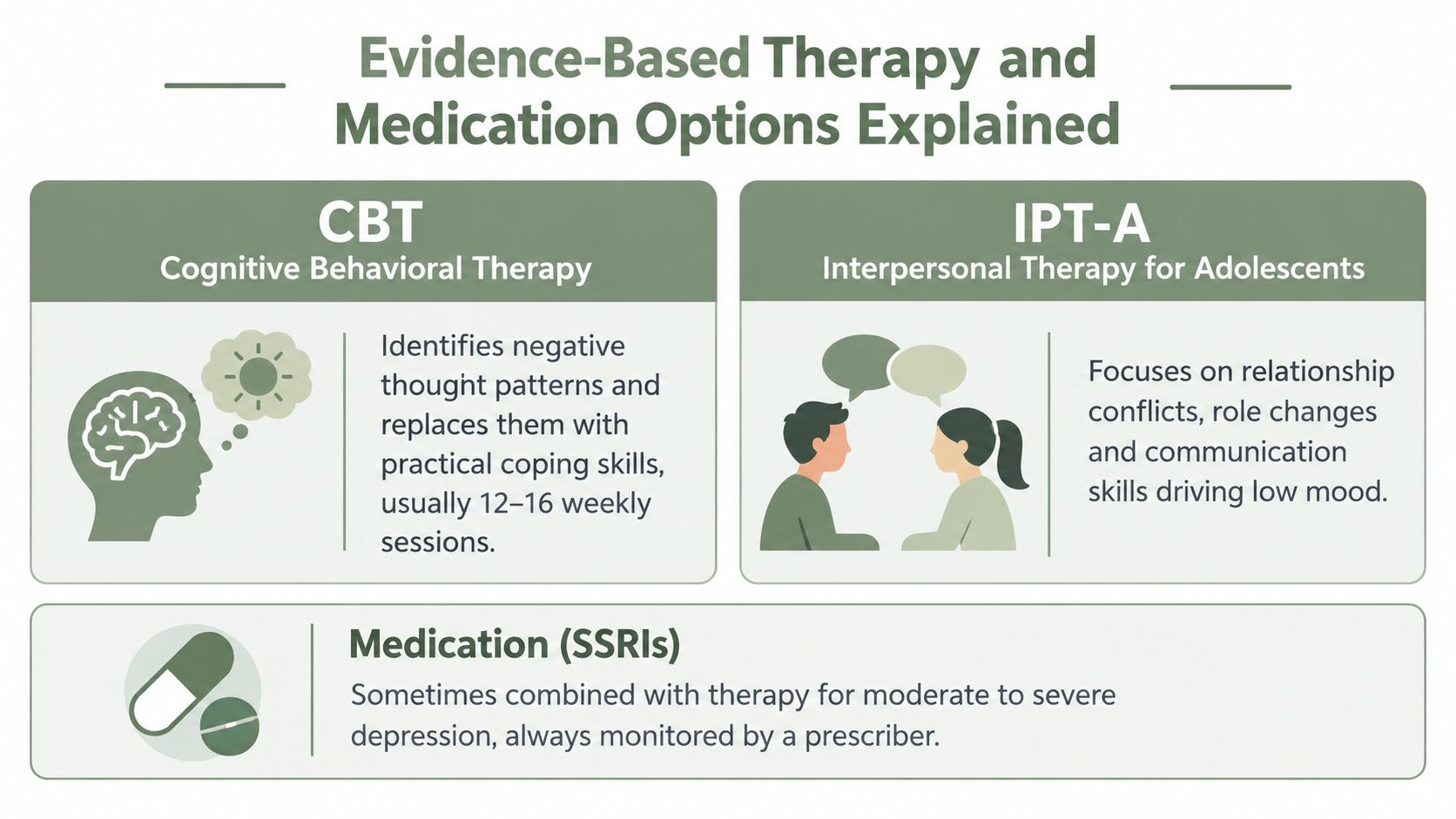
Cognitive Behavioral Therapy, or CBT, helps teens identify automatic thoughts that intensify hopelessness, guilt, or worthlessness. The therapist then helps the teen test those thoughts, build coping skills, and change behavior through manageable activity scheduling. A teen may begin with a small goal such as leaving the bedroom for a meal, attending one class, or contacting a trusted friend.
Interpersonal Psychotherapy for Adolescents, or IPT-A, focuses on relationships and transitions. It can be a strong fit when depression follows grief, conflict with friends or family, a role change, or communication breakdown. The therapist helps the teen understand how relationships affect mood and practice different ways of asking for support and resolving conflict.
Caregiver involvement should be planned, not improvised. Younger adolescents usually need parents to support routines, transportation, safety, and practice between sessions. Older teens need increasing privacy and ownership, while caregivers still need enough information to support treatment and respond to risk. The therapist should explain what the teen can discuss privately and which safety concerns must be shared.
The Patients Guide explains why evidence-based care means matching treatment decisions to reliable research, clinical judgment, and the individual patient rather than choosing whatever sounds reassuring.
When medication enters the plan
Mild depression may improve with close monitoring and psychotherapy before medication is considered. For moderate or severe depression, or when therapy isn't available or hasn't been sufficient, a prescriber may discuss an SSRI. Fluoxetine combined with CBT has the strongest medication-plus-therapy signal in the evidence summarized by The Lancet, and guidelines often favor combined treatment for higher-severity presentations. The same evidence review reports psychotherapy response of 39% at about two months compared with 24% in control conditions, with an NNT of 6.2 (The Lancet evidence review30137-1/fulltext)).
Fluoxetine and escitalopram are the adolescent depression medications most commonly discussed in relation to regulatory approval, but only a qualified prescriber should decide whether either is appropriate. Antidepressants carry a boxed warning about suicidal thoughts and behaviors in young people. Practically, that means informed consent, careful monitoring, family education about activation or worsening distress, and prompt contact with the prescriber when concerning changes appear.
An initial psychiatric evaluation usually covers mood, anxiety, sleep, appetite, concentration, substance use, trauma, medical history, family history, current medications, and safety. The teen should have time to speak without a parent present, followed by a shared plan that protects privacy while keeping safety central.
First Steps This Week for Teens and Caregivers
The best first week is not dramatic. It creates one honest conversation, one appointment, and enough information for the clinician to make a useful decision.
Start without turning your teen into a problem
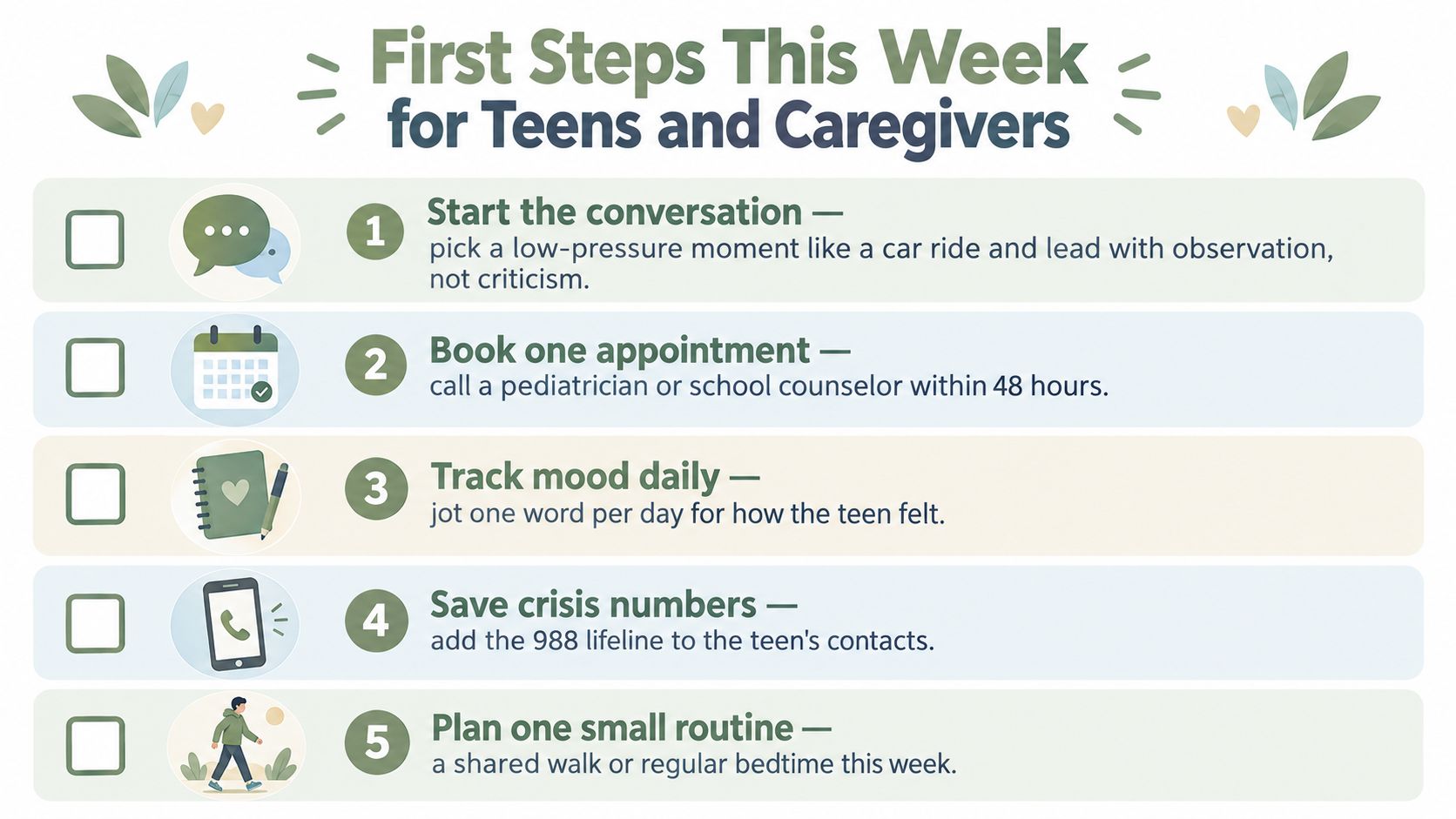
Choose a low-pressure setting, such as a car ride or a walk. Lead with observations, not labels: “You haven't seemed like yourself, and I've noticed you're sleeping more and skipping things you used to enjoy.” Then ask, “What do you think would make this week easier?”
A teen may reject the word depression. You can still respond to the changes. Offer choices about who to contact, whether the first appointment is online or in person, and whether the teen wants you in the room for part of the visit. Choice reduces the feeling of being managed.
Prepare for the first appointment
Gather:
- School observations: Attendance changes, missing work, teacher concerns, concentration problems, and accommodations already tried.
- Daily patterns: Sleep timing, appetite, energy, hygiene, social activity, and moments when mood improves or worsens.
- Clinical background: Family mental health history, medical conditions, current medications, supplements, and substance use.
- Safety information: Any statements about death, self-harm, suicide, access to firearms or medications, and previous crises.
Track one or two words each day rather than demanding a detailed diary. Record mood, sleep, and the most significant change in functioning. The Wald Behavioral Health sleep resource may also help families identify sleep patterns that deserve discussion during assessment.
Know when routine scheduling is not enough
If your teen has suicidal thoughts, a plan, intent, recent attempt, or cannot stay safe, seek same-day professional help. In the United States, call or text 988 for the Suicide and Crisis Lifeline, use the Crisis Text Line, contact a local crisis service, or go to an emergency department when immediate safety is at risk. Don't leave a high-risk teen alone, and secure medications, firearms, and other lethal means while arranging urgent support.
If risk isn't acute, call a pediatrician, therapist, or school counselor within the next few days. Say: “My adolescent has had persistent mood and functioning changes, and I'd like a depression and safety assessment.” Clear language helps the office route the request appropriately.
In-Person Versus Telehealth for Teen Mental Health Care
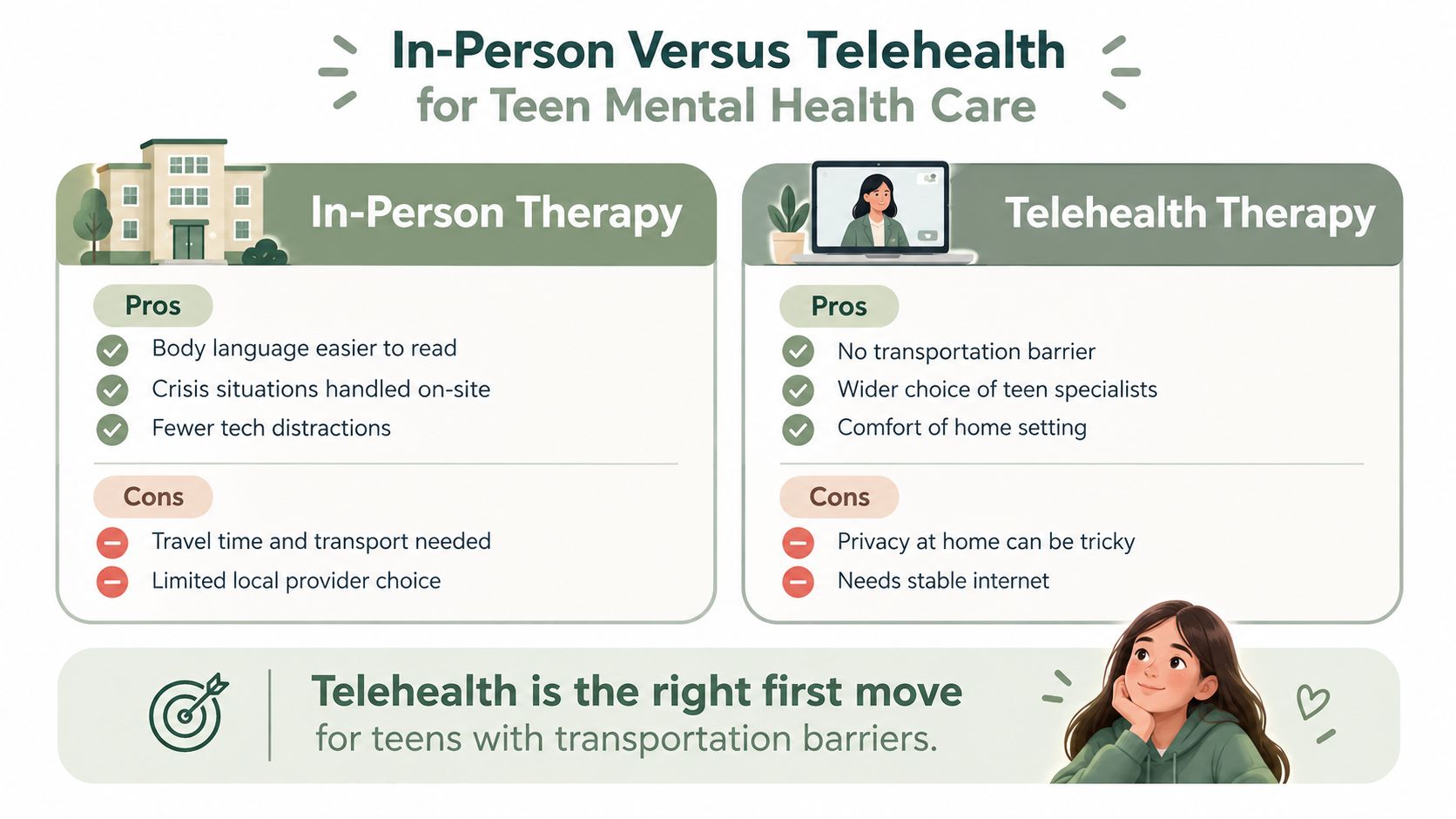
The best format is the one that gets a teen into care and keeps appointments possible. Telehealth fits families facing difficult transportation, long distances from adolescent specialists, tight school or work schedules, or a teen who feels overwhelmed leaving home. It can also connect adolescents with a clinician who understands their concerns when local choices are limited.
Match the format to the clinical situation
In-person care lets clinicians observe body language more directly, coordinate with caregivers in the same setting, and respond on site if distress rises. Younger adolescents, or teens who become distracted, guarded, or uncomfortable on video, may form a stronger connection in an office. Some families also benefit from keeping treatment separate from home.
Telehealth is a legitimate treatment format, not a lesser version of therapy. Families can review the Wald Behavioral Health telehealth guide to learn how secure video sessions work. A 2025 RAND analysis found that 45.3% of adolescents who received mental health treatment received some care through telehealth (RAND and telehealth access research). A separate meta-analysis found that telepsychiatry reduced depressive symptoms in youth and performed better than waitlist controls. These findings support telehealth as a practical option, while leaving room for clinical judgment.
Telehealth still requires a workable setup. Research found uneven use, with rural adolescents and uninsured teens less likely to use it. The teen needs a private space, stable internet, a charged device, and a clear backup plan if the connection fails. A shared bedroom can compromise confidentiality, and screen fatigue can weaken participation.
Situations that need more than routine video therapy
Active suicidality requiring immediate containment, severe eating disorders with medical instability, psychosis, or an unsafe home may call for a higher level of in-person care. The treating clinician should decide whether outpatient telehealth is appropriate, rather than leaving that decision to the family alone.
Start with the format that removes the largest obstacle, then reassess. Hybrid care can work well. If video sessions limit participation, move to office visits. If travel causes missed appointments, ask whether telehealth can preserve continuity. The decision can change. Starting appropriate care matters more than choosing a perfect format at the first appointment.
Why So Many Teens Say They Do Not Want Help
A teen's refusal often sounds rational: “I can handle it,” “I don't want anyone to know,” or “Therapy won't change anything.” Depression can make those beliefs feel like settled facts. Treat the resistance as information, not as a final clinical decision.
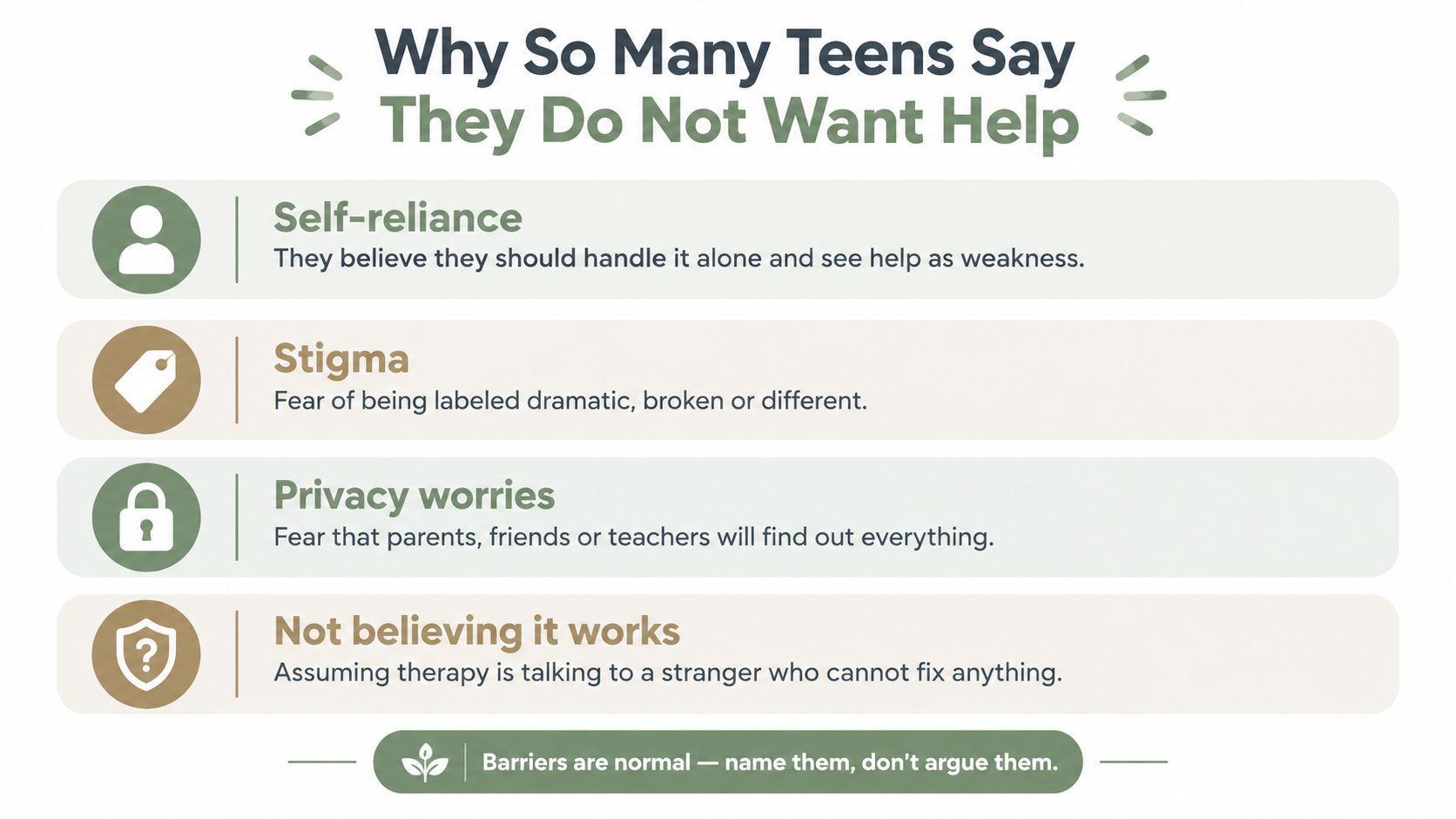
Recent data on adolescents with a past-year major depressive episode found that more than 42% did not receive treatment. The most common stated barriers included believing they should handle it themselves at 87%, stigma concerns at 63%, privacy concerns at 57%, and doubts that treatment would help at 54% (Jed Foundation mental health data). A separate CDC summary reported that 20% of adolescents ages 12 to 17 had unmet mental health care needs in the previous twelve months, showing that availability alone doesn't guarantee engagement.
Answer the barrier underneath the words
Self-reliance often protects a teen's identity. They may believe needing help proves weakness or burdens their family. Reframe it without arguing: “Handling everything alone is one option, but you shouldn't have to carry this without support.”
Stigma creates fear of being labeled dramatic, broken, unstable, or different. Say plainly that depression is a health concern, not a moral failure, and that treatment is private healthcare rather than a public announcement.
Privacy worries need a concrete answer. Ask the therapist to explain confidentiality at the start, including what stays private and what must be shared when safety is at risk. A teen should be able to speak alone for part of the appointment, while parents receive enough information to support safety and treatment.
Doubt about therapy is reasonable when the teen imagines an adult asking endless questions without offering tools. Explain that effective therapy includes skills, practice, problem-solving, and measurable goals. The first appointment is an evaluation and fit conversation, not a commitment to continue with one clinician forever.
Give agency, not veto power: Let the teen choose between suitable therapists, formats, or appointment times, but don't make severe symptoms wait for perfect enthusiasm.
Book the appointment even if your teen isn't convinced. Ask the clinician to spend the opening session discussing what the teen wants changed, what they fear about treatment, and how privacy will work. Engagement grows when a teen has a meaningful voice in the plan, but safety still requires adults to act when risk is high.
Getting Started With Wald Behavioral Health
Families often delay care because they don't know what the first contact will involve. Wald Behavioral Health offers a free 15-minute consultation to discuss the teen's needs, questions, fit, and scheduling options without requiring a commitment to treatment.
Request the consultation online or by phone. Have the teen's age, location, primary concerns, preferred format, availability, insurance information, and any urgent safety concerns ready. Ask whether the practice is in network with your plan, what self-pay arrangements are available, and whether the clinician can work with the teen's location and needs.
Wald Behavioral Health provides in-person appointments at its Coral Gables clinic and secure telehealth for clients in Florida, Maryland, and PSYPACT-participating states. Telehealth can support most therapy and many medication-management visits when clinically appropriate, but it isn't a substitute for emergency or acute crisis care. Families should use emergency services or crisis resources when a teen can't remain safe.
What the first visit should accomplish
Expect a clinical interview rather than a quick label. The clinician may ask about:
- Current symptoms: Mood, irritability, motivation, sleep, appetite, concentration, and enjoyment.
- Daily functioning: School attendance, academic performance, friendships, family conflict, and self-care.
- Safety: Suicidal thoughts, self-harm, intent, access to lethal means, and protective supports.
- Context: Medical history, family mental health history, stressors, trauma, medications, and substance use.
The teen should have developmentally appropriate time to speak, including private time when suitable. The parent contributes observations and history, while the clinician protects confidentiality within clearly explained safety limits.
The appointment should end with a shared plan, not vague reassurance. That plan might include CBT or IPT, caregiver guidance, school coordination, a medication evaluation, a safety plan, or a higher level of care. If the first clinician isn't a fit, say so and ask for a referral rather than abandoning treatment.
---
Wald Behavioral Health provides evidence-based therapy for adolescents with depression, anxiety, OCD, school stress, and related concerns, with parent guidance included when appropriate. Visit Wald Behavioral Health to request the free 15-minute consultation and decide whether in-person or telehealth care is the right first step for your family.
Questions about your child or teen?
Dr. Wald offers a free 15 minute consultation to talk through what you are seeing and whether the practice is a good fit.
Free 15 Minute Consultation