Child Psychologist Guide: What They Do and When to See One

Your eight-year-old complains of stomach pain every Sunday evening. Your teenager, once quick to laugh, now spends most of the day behind a closed bedroom door. You've tried reassurance, stricter routines, fewer screens, and advice from family, yet the pattern keeps returning. At some point, “maybe it's just a phase” starts to feel less like an explanation and more like a reason to keep waiting.
A child psychologist can help you understand what's driving the pattern, identify skills your child needs, and show the adults around them how to support change between sessions. That role matters because children often communicate distress through behavior, sleep, school attendance, physical complaints, or conflict rather than through a clear explanation of what they feel.
## Table of Contents - When a Child Psychologist Becomes Part of a Family's Story - Why the professional role matters - What a Child Psychologist Actually Does - Assessment comes before a useful plan - Common Concerns Child Psychologists Treat - Emotional difficulties - Behavioral and attention challenges - Developmental and learning questions - Family and life transitions - Evidence-Based Approaches That Guide the Work - The method should match the problem - Choosing Between Psychologist Care, School Support, and Parent-Led Plans - What Treatment Looks Like From the First Call to Ongoing Sessions - A plan needs observable goals - Preparing for the first visit - Misconceptions That Keep Families From Starting Sooner - Change usually arrives in small pieces - Practical Next Steps and Signs It's Time to Reach Out - Signs that deserve attention - A practical search plan
When a Child Psychologist Becomes Part of a Family's Story
At first, Maya's parent focused on the stomach aches. The eight-year-old felt sick before school, asked to stay home, and seemed fine again by late afternoon. Then she stopped attending birthday parties, began checking the front door repeatedly, and cried when her parent left the room. The family had been managing each episode separately. A child psychologist helped them look at the full pattern instead of treating each symptom as an isolated event.
Families reach care through many doors. A pediatrician may recommend an evaluation after ruling out medical contributors. A teacher may notice that a child who speaks freely at home barely participates in class. A school may suggest counseling after repeated conflicts, or a family may seek help following divorce, bereavement, adoption, bullying, a sibling's crisis, or a serious illness. Sometimes the referral comes only after months of disrupted sleep and exhausted caregivers.
A useful starting point: Seek help when a pattern interferes with daily life, relationships, learning, sleep, or family functioning, even if you can't yet name a diagnosis.
Why the professional role matters
A school counselor works within the educational setting, usually offering short-term support, academic guidance, crisis response, or help with peer and school concerns. A psychiatrist is a medical doctor who can evaluate mental health conditions and prescribe medication. A child psychologist focuses on psychological assessment, developmentally appropriate therapy, and the interaction between a child's emotions, behavior, relationships, and environments.
The right clinician depends on the question you're trying to answer. If you need to understand learning, attention, emotional functioning, or complex behavior across settings, a psychologist may be appropriate. If medication might be part of treatment, the psychologist can collaborate with a pediatrician or psychiatrist rather than prescribing it themselves.
The Wald Behavioral Health background page offers one example of how a pediatric-focused practice may work with children, adolescents, young adults, and families. Many parents wait because they hope the issue will disappear. Acting earlier doesn't mean you've failed. It means you're taking the pattern seriously before it becomes more difficult to change.
What a Child Psychologist Actually Does
Think of a child psychologist as part developmental detective and part skills coach. The detective gathers clues from the child, caregivers, teachers, medical history, and behavior across settings. The coach then helps the family practice responses that make anxiety, frustration, attention problems, or conflict more manageable.
A clinical child psychologist typically has a doctoral degree, such as a PhD or PsyD, followed by supervised clinical training, licensure, and specialized experience with child development, family systems, and psychological assessment. Training and licensing requirements vary by jurisdiction, so families should verify the clinician's current license and scope of practice.
Assessment comes before a useful plan
Assessment isn't just asking a child, “How do you feel?” A psychologist may use:
- Caregiver interviews: Parents describe the timeline, triggers, routines, strengths, medical history, and previous efforts to help.
- Child interviews: The clinician asks questions in language suited to the child's age and may use drawing, play, examples, or structured conversation.
- Observation: The psychologist watches how the child interacts with caregivers, handles tasks, communicates, or responds to frustration.
- Standardized measures: Questionnaires and tests can compare patterns of attention, mood, anxiety, behavior, learning, or development with established clinical expectations.
- Collateral information: With appropriate permission, the psychologist may gather information from teachers, pediatricians, or other providers.
The purpose is to distinguish similar-looking problems. A child who refuses school might be avoiding separation, bullying, academic difficulty, panic symptoms, sensory distress, sleep deprivation, or a combination of factors. The treatment plan changes depending on the explanation.
A child psychologist may provide individual therapy, family therapy, parent coaching, consultation, and diagnostic evaluation. Younger children often communicate through play and shared activities, while older children and teenagers may use more direct conversation, skills practice, and behavioral experiments.
School psychologists also understand children thoroughly, but their primary focus is educational functioning, evaluations connected to learning, and school-based accommodations. A child psychologist can coordinate with school personnel while addressing concerns that continue at home or across multiple settings.
Child psychologists don't prescribe medication. When medication is being considered, they may share observations and treatment data with the prescribing professional, with the family's consent, so the child's care remains coordinated.
Common Concerns Child Psychologists Treat
Parents often ask whether their concern is “serious enough” for a child psychologist. A diagnosis isn't required before making an appointment. The more useful question is whether the child's pattern is persistent, worsening, distressing, or interfering with everyday functioning.
Emotional difficulties
Anxiety may appear as repeated reassurance-seeking, stomachaches, nightmares, perfectionism, irritability, or refusal to separate from a caregiver. A child may know the fear seems bigger than the situation but still feel unable to enter the classroom, sleep alone, speak to peers, or try unfamiliar activities.
Depression doesn't always look like sadness. A child might lose interest in play, become unusually angry, stop caring about friendships, criticize themselves harshly, or struggle with energy and concentration. Teenagers may withdraw, stop participating in activities, or show a marked change in academic engagement.
Behavioral and attention challenges
Defiance, aggression, impulsivity, and noncompliance can exhaust a household. The pattern may involve arguing over every instruction, hitting siblings, leaving tasks unfinished, losing belongings, or melting down when a routine changes.
Behavior also communicates information. A child may lack attention-management skills, respond to unclear expectations, seek connection through conflict, or become overwhelmed by demands. A psychologist examines what happens before and after the behavior rather than treating the behavior as a character flaw.
Developmental and learning questions
Some families seek an evaluation for autism, attention differences, learning differences, language concerns, developmental delays, or uneven skills. Signs may include difficulty with social communication, intense distress around changes, persistent academic struggles despite effort, or a gap between what a child understands and what they can show at school.
Assessment can clarify whether the child needs therapy, educational support, medical consultation, specialized testing, or several forms of help working together.
Family and life transitions
Divorce, grief, adoption, trauma, bullying, family conflict, and pediatric medical illness can change a child's sense of safety. A child might regress in independence, become watchful and irritable, avoid reminders, cling to caregivers, or act out at the person they trust most.
A child psychologist can help the family understand the response, restore predictable routines, and build coping skills. The clinician may also recommend another specialist when the concern falls outside psychological care, such as speech-language, occupational, educational, or medical evaluation.
Evidence-Based Approaches That Guide the Work
Evidence-based care means the psychologist chooses methods supported by research and clinical guidance, then adapts them to the child's developmental level and family context. It doesn't mean every child receives the same worksheet or follows a rigid script. It means treatment has a reason, a target, and a way to evaluate whether it's helping.
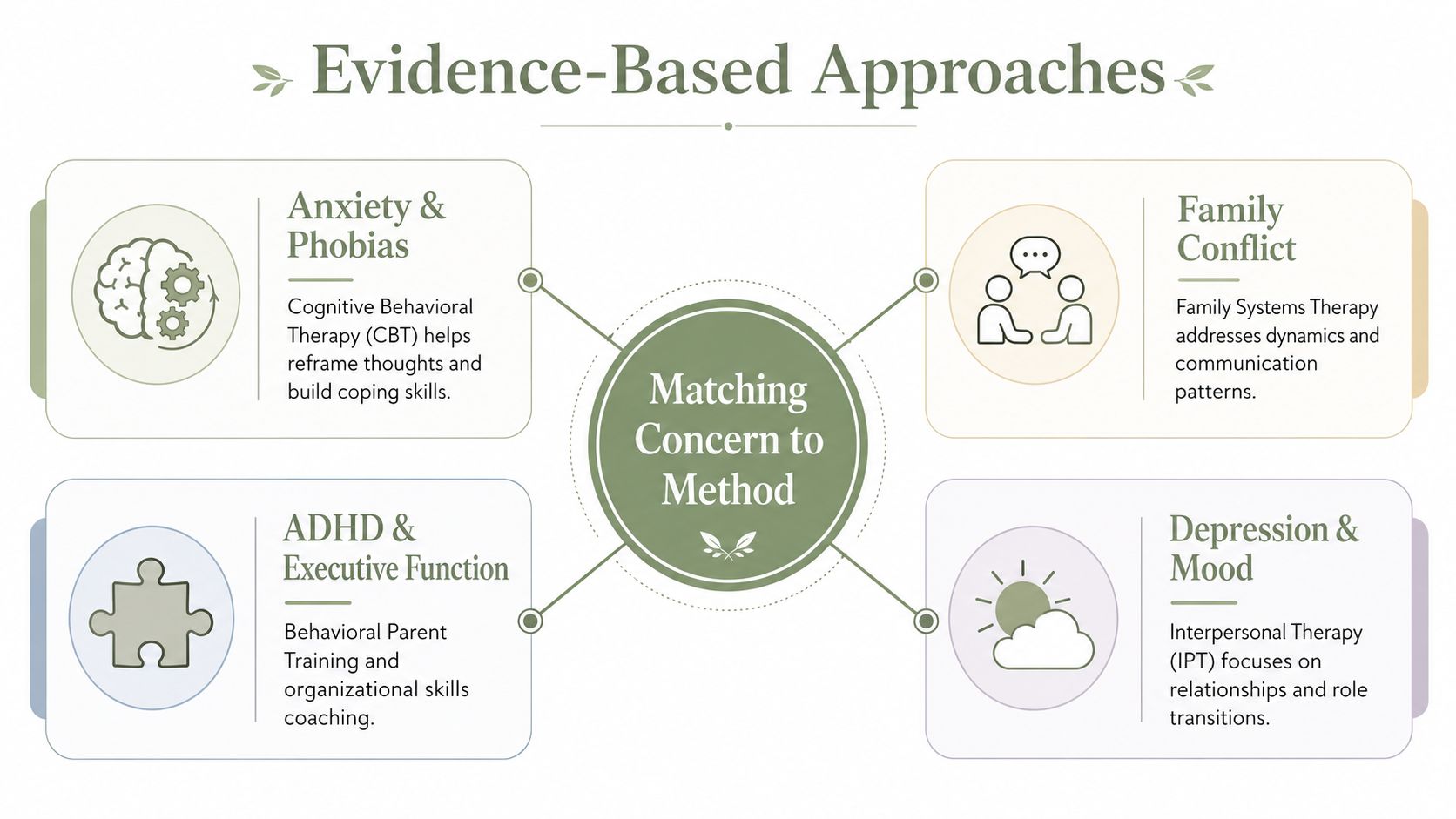
For youth anxiety disorders, cognitive behavioral therapy, or CBT, has the strongest support as a first-line psychosocial treatment. Randomized trials report post-treatment recovery rates of about 47% to 66% and response rates of about 57% to 60%, while clinical guidelines rate CBT as a Level 1 recommendation for common pediatric anxiety disorders, as summarized in this review of youth anxiety treatment. Exposure is central because children gradually practice facing feared situations instead of allowing avoidance to keep the fear powerful.
The method should match the problem
For trauma symptoms, a psychologist may use trauma-focused CBT, which combines coping skills, emotional education, caregiver involvement, and careful processing of traumatic memories. For defiance and disruptive behavior, behavioral parent training changes what happens before and after behavior, including instructions, reinforcement, consequences, and consistent limits. Reviews describe these programs as effective for many preschool- and school-age children, including parent strategies for bedtime refusal and night awakenings, as documented in this review of behavioral parent training.
Younger children may benefit from play-based work, parent coaching, or Parent-Child Interaction Therapy and adapted models. Older children may use CBT skills, acceptance and commitment therapy, interpersonal therapy, problem-solving, or family-focused treatment. ADHD care often combines behavioral parent training with organizational supports and collaboration between home and school.
The Wald Behavioral Health approach describes developmentally informed, evidence-based treatment with parent guidance where appropriate. A good plan also includes measurement. Parents and teachers may track school refusal, bedtime behavior, panic episodes, completed routines, mood, or conflict, then use that information to adjust treatment when progress stalls.
Choosing Between Psychologist Care, School Support, and Parent-Led Plans
Families rarely choose from a perfect menu. They may face a long wait, insurance restrictions, limited specialists nearby, or a child who can attend school but struggles intensely at home. The WHO and UNICEF have described children's access to mental health services as inadequate worldwide, with availability, affordability, and stigma limiting care. In the United States, 72% of counties have no practicing child and adolescent psychiatrist, and many states have more than 90% of counties without one, according to this AACAP workforce policy brief. A recent survey cited in the same brief found that 16.6% of households with children who received treatment reported difficulty accessing it.
| Pathway | Typical Cost | Wait Time | Confidentiality | Best For | |---|---|---|---|---| | Licensed child psychologist | Varies by insurance, benefits, and private-pay arrangements | May range from prompt availability to a substantial wait | Protected clinical care, with safety and legal exceptions | Persistent, complex, unclear, or impairing concerns | | School counseling and educational supports | Often provided through the school system, with eligibility and resources varying | Depends on school staffing and referral process | Information is handled within the educational setting and may be shared with school personnel involved in support | Academic stress, peer concerns, short-term support, and educational accommodations | | Parent-led programs | Varies by book, course, app, or program | Often available immediately | Data and privacy depend on the provider | Mild behavior, sleep, routines, and caregiver skill-building | | Waitlist with interim support | No treatment cost while waiting, though families may use other resources | Uncertain | Depends on interim provider and setting | A temporary bridge when the child is stable and safety isn't at issue |
School support can be a practical first move for classroom problems, but school counseling generally isn't a substitute for ongoing outpatient therapy or a full psychological evaluation. Parent-led plans can help with structured routines and mild behavior concerns, especially when caregivers receive clear instructions and consistently practice them.
Access rule: Don't let the perfect referral become the only referral. Use school support, a pediatrician, telehealth, or a parent program as a bridge when the child is safe and the plan matches the level of need.
Moderate or severe symptoms, major impairment, unclear developmental concerns, or safety risks call for professional assessment. If a family is waiting, ask the clinician what can be done now, whether telehealth is suitable, and whether another licensed provider can offer interim care.
What Treatment Looks Like From the First Call to Ongoing Sessions
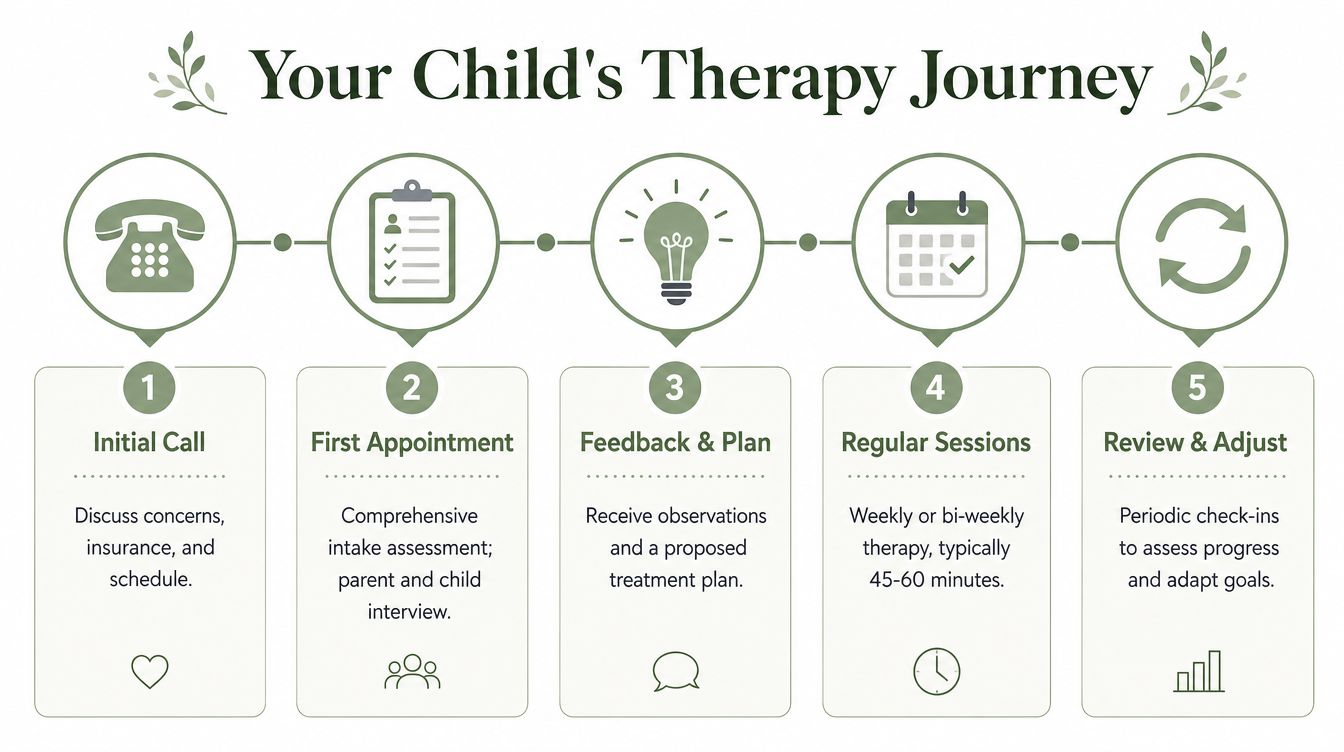
The first call is usually practical rather than dramatic. An intake coordinator or psychologist may ask what changed, when it began, where it occurs, what you've tried, whether there are safety concerns, what insurance you use, and whether the practice offers in-person or telehealth appointments.
The first appointment often centers on history-taking and assessment. Parents may speak with the psychologist alone, the child may join for part of the meeting, and the clinician may observe the family together. A child who refuses to talk hasn't ruined the appointment. The psychologist can learn from play, silence, movement, drawing, task persistence, and the way the child responds to a caregiver.
A plan needs observable goals
After the initial assessment, the psychologist shares impressions, explains possible contributing factors, and proposes treatment goals. Useful goals sound concrete: returning to class after morning drop-off, staying in bed through the night, completing a morning routine with fewer prompts, reducing physical aggression, or speaking to a teacher when worried.
Ongoing sessions may involve the child, the parents, or both. The psychologist might teach breathing and thought-challenging skills, practice an exposure, coach a caregiver through a limit-setting interaction, use play to build emotional language, or help a teenager solve a problem connected to friendships.
Progress tracking can include parent and teacher reports, rating scales, attendance, sleep records, or a simple count of completed routines. Caregivers support generalization by practicing the agreed skill at home. If the child learns calming strategies in the office but never uses them before school, the family and psychologist need to adjust the home plan.
Preparing for the first visit
Bring medication and medical information, school reports, prior evaluations, relevant custody or consent details, and a short timeline of the concern. Tell your child, “You'll meet someone whose job is to understand what feels hard and help us practice,” rather than promising that the psychologist will make every uncomfortable feeling disappear.
If your child refuses to participate, stay calm and avoid turning the appointment into a test of obedience. Let the psychologist lead. A strong clinician can begin by building safety and connection, then gather information through developmentally appropriate activities.
Misconceptions That Keep Families From Starting Sooner
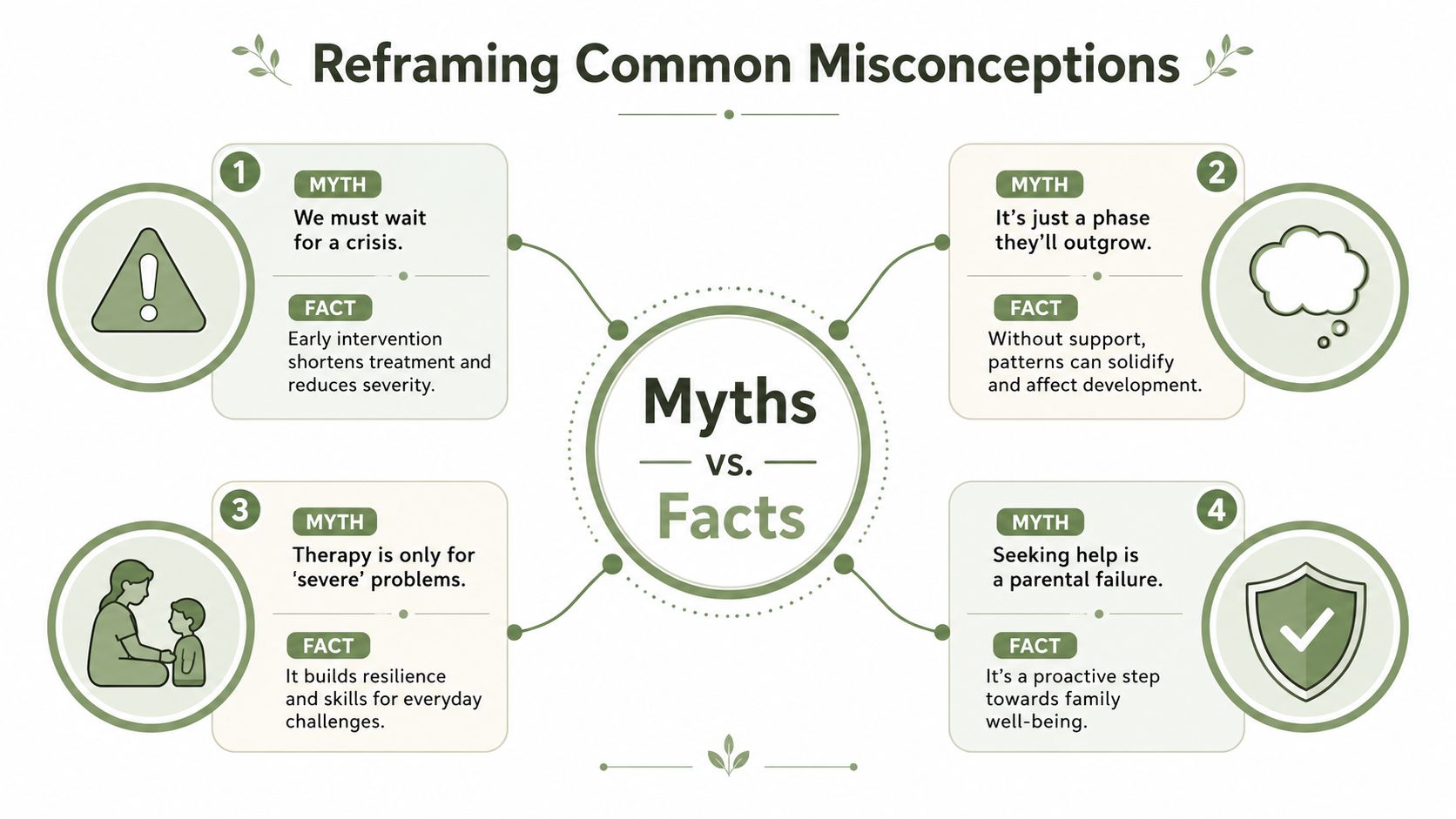
Waiting for a crisis is one of the most common delays. A child doesn't need to be in immediate danger before a family asks for help. Persistent avoidance, disrupted sleep, escalating conflict, or a noticeable loss of functioning can justify an outpatient consultation.
Children also don't need to arrive eager to discuss private feelings. Younger children may communicate through play, drawing, movement, or pretend scenarios. Teenagers may start with practical complaints, skepticism, or a few words. Trust grows when the clinician respects the child's pace while still setting clear goals.
Change usually arrives in small pieces
One breakthrough rarely changes a family's entire routine. Progress may look like a child entering school after a shorter goodbye, a teenager returning one message, or a parent giving one clear instruction instead of repeating it through a long argument. Those small shifts matter because treatment works through practice, repetition, and adjustment.
Therapy also isn't a character judgment. Parents seek pediatricians for physical concerns, dentists for tooth pain, tutors for academic gaps, and coaches for skill development. Psychological care serves a similar function for emotional, behavioral, and relationship skills.
A diagnosis, when appropriate, is a working tool for choosing treatment and communicating needs. It isn't a complete description of your child's personality, potential, or identity. Asking for an evaluation is a parenting skill. It shows that you're willing to gather better information and change the plan when the current one isn't working.
Practical Next Steps and Signs It's Time to Reach Out
Start with what you can observe, not what you fear the behavior means. Write down the date, setting, trigger, what your child did, how long it lasted, and what happened afterward. This record helps a psychologist see patterns that are difficult to recall during a stressful intake call.
Signs that deserve attention
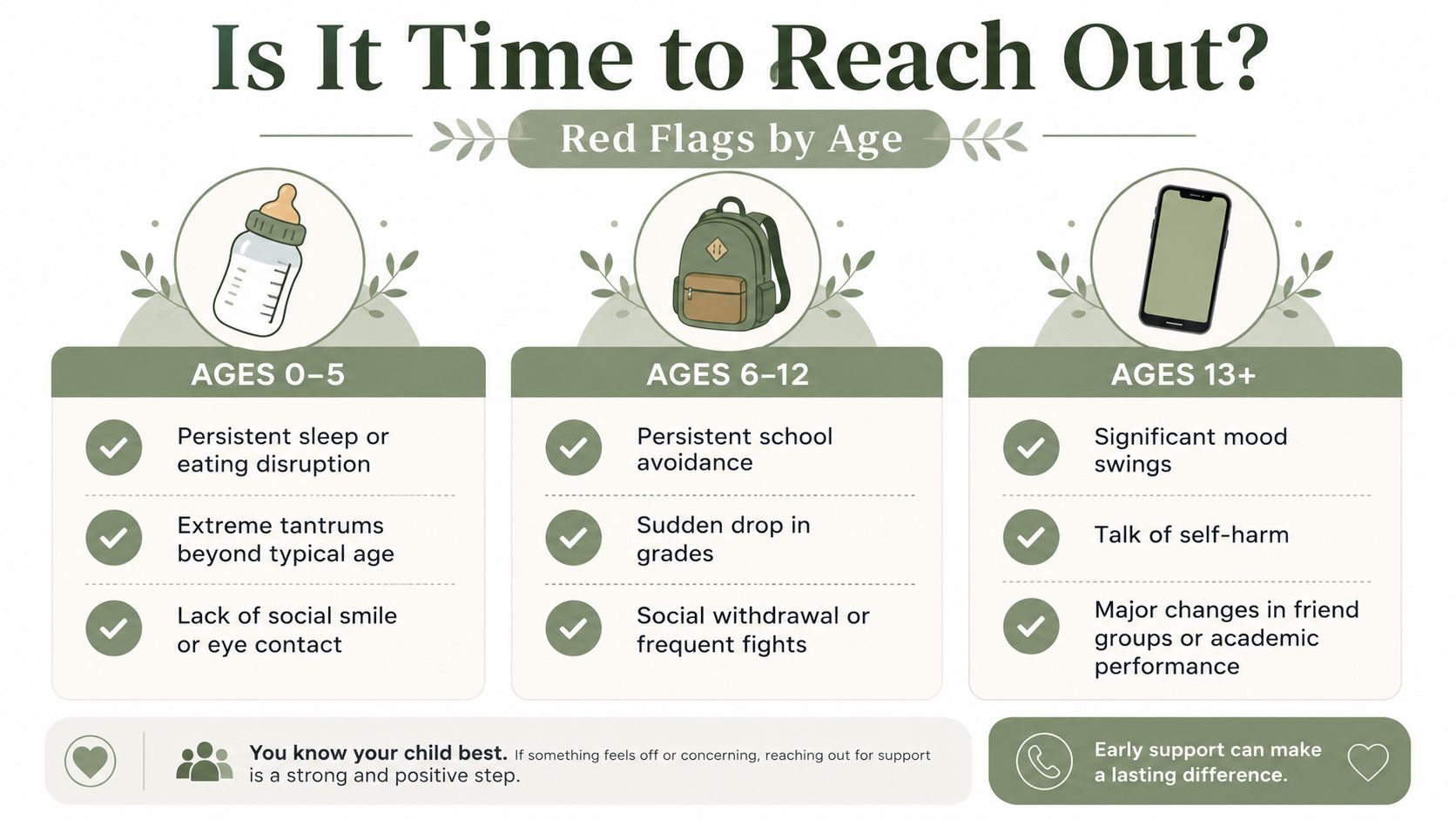
For younger children, watch for persistent sleep or eating disruption, extreme tantrums that seem out of step with development, regression, or limited social engagement. For school-age children, note school avoidance, a sudden academic decline, withdrawal from friends, frequent fights, or a growing inability to manage ordinary transitions. For teenagers, take seriously major mood changes, intense self-criticism, significant changes in friendships or school performance, and any mention of self-harm.
If your child talks about suicide or self-harm, has a plan, may act soon, or cannot remain safe, seek immediate crisis or emergency support in your location. Don't leave the child alone while arranging help. Scheduled outpatient care is appropriate for concerns that are distressing or disruptive but don't involve immediate danger.
A practical search plan
- Contact the pediatrician. Ask whether medical factors, sleep, medication effects, or developmental concerns need evaluation.
- Search for licensed clinicians. Use your state licensing board, insurance directory, professional organizations, or reputable local practices.
- Verify specialization. Ask whether the psychologist works with your child's age, presenting concern, and family circumstances.
- Ask about access. Clarify availability, telehealth eligibility, fees, insurance, cancellation policies, and waitlist alternatives.
- Ask about participation. Find out how parents, teachers, or other providers may be involved and how confidentiality will be explained to the child.
- Review fit through progress. After several sessions, look for a shared formulation, clear goals, respectful communication, and observable movement, even if progress is gradual.
Prepare your child with simple, honest language. Gather school notes, prior testing, medication details, developmental history, and examples of recent behavior. If you're seeking care in Florida, Maryland, or a PSYPACT-participating state, you can use the Wald Behavioral Health contact page to ask about consultation and scheduling options.
A child psychologist can't remove every difficult feeling or make parenting effortless. The goal is more practical: understand the pattern, teach usable skills, strengthen caregiver responses, and help the child function more freely at home, school, and with peers.
---
Wald Behavioral Health provides evidence-based therapy for children, adolescents, young adults, and families, with parent training for concerns such as anxiety, sleep, tantrums, school refusal, and noncompliance. Visit Wald Behavioral Health to explore in-person and telehealth options and request a consultation about your family's needs.
Questions about your child or teen?
Dr. Wald offers a free 15 minute consultation to talk through what you are seeing and whether the practice is a good fit.
Free 15 Minute Consultation