10 Anxiety Therapy Activities for Teens and Parents
Your teen says they feel sick before school, stays awake replaying conversations, or asks to avoid the next presentation. You offer breathing exercises, but the relief lasts only until the next worry appears. That doesn't mean the exercise failed. It may be targeting the wrong part of the anxiety cycle.
Anxiety therapy activities work best when they match the pattern maintaining the distress. Breathing and grounding can reduce immediate body arousal. Thought work can address catastrophic predictions. Exposure targets avoidance, while sleep routines, behavioral activation, social practice, and caregiver coaching address the habits and responses that keep anxiety going.
Use these activities in developmentally appropriate ways, and practice skills when your child or teen is relatively calm. Home exercises can support therapy, but they shouldn't replace professional care when anxiety causes significant problems with school, sleep, friendships, family life, or daily functioning. Exposure tasks should be gradual and collaboratively planned, particularly when OCD, panic, trauma-related symptoms, or severe avoidance are involved.
The ten activities below are organized by the anxiety cycle they target. Each includes the best use, practical steps, an example, and cautions, so you can choose a realistic starting point rather than treating every exercise as interchangeable.
## Table of Contents - 1. Cognitive Behavioral Therapy for Anxiety - Make the experiment behavioral - 2. Exposure-Based Interventions - ERP requires special care - 3. Mindfulness and Acceptance-Based Interventions - 4. Progressive Muscle Relaxation - 5. Behavioral Activation - 6. Deep Breathing and Diaphragmatic Breathing Techniques - Keep the strategy flexible - 7. Parent Training and Coaching for Anxiety Management - 8. Cognitive Restructuring and Thought Challenging - Follow the anxiety cycle - 9. Sleep Hygiene and Behavioral Sleep Interventions - Make caregiver responses consistent - 10. Social Skills Training and Peer Interaction Coaching - 10 Anxiety Therapy Activities: Quick Comparison - Turn One Exercise Into a Supportive Plan
1. Cognitive Behavioral Therapy for Anxiety
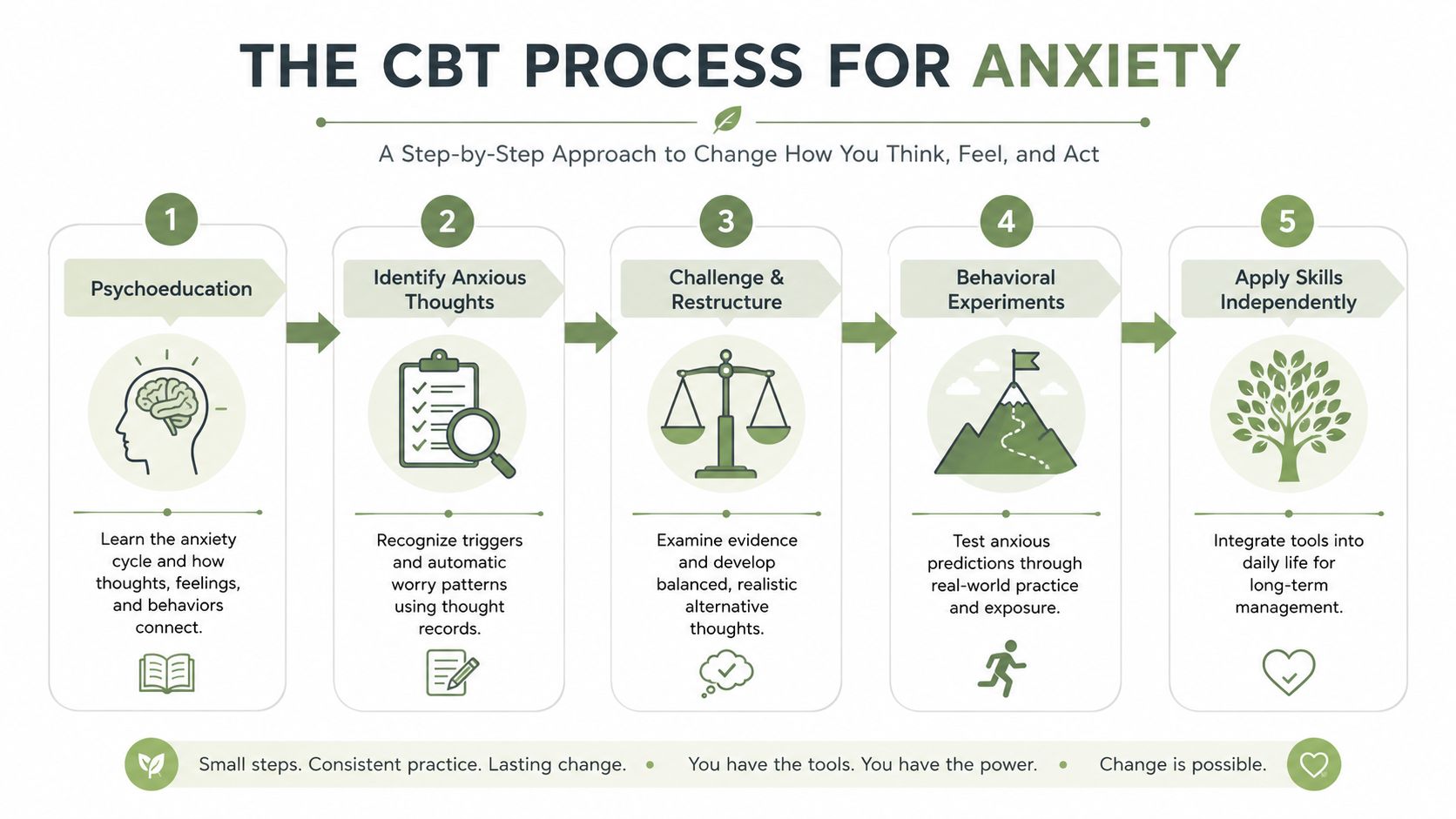
Cognitive behavioral therapy, or CBT, gives anxiety a clear map. A young person learns to connect situations, thoughts, physical sensations, emotions, and behaviors, then looks for places where the cycle can change. A child might notice that a stomachache before school leads to the thought “Something bad will happen,” followed by asking to stay home. A teen might recognize that avoiding eye contact briefly lowers discomfort but makes future conversations feel even more threatening.
Start with psychoeducation rather than asking a child to challenge thoughts immediately. Draw the cycle on paper, use faces or colors to show emotion intensity, and ask, “What did your anxiety predict, and what did you do next?” Older teens can use a thought record or phone note. Younger children may prefer drawing an “anxiety detective” chart.
Make the experiment behavioral
CBT becomes more useful when it moves beyond worksheets. Help the young person identify a prediction, choose a small test, and record what happened. For example, a teen who predicts that classmates will laugh if they answer incorrectly might contribute one comment in class and observe the actual response.
- Start with a manageable prediction: Choose a fear that's important but not overwhelming.
- Use client input: A child or teen is more likely to practice a plan they helped design.
- Include parents appropriately: Caregivers can praise effort and help review observations without turning every evening into a therapy session.
- Practice first: Try the thought record together before assigning it independently.
CBT has a strong clinical benchmark for pediatric and adolescent anxiety. A Cochrane review of CBT for youth anxiety reported remission of any anxiety diagnosis in 58.9% of CBT participants, compared with 16.1% of waiting-list controls, with an estimated number needed to treat of 3. That evidence supports structured CBT activities involving coping skills, exposure, and homework, while also reminding families that individual results vary.
For an overview of developmentally informed anxiety care, see Wald Behavioral Health's anxiety therapy services.
2. Exposure-Based Interventions
Exposure is the activity to choose when avoidance has become the main problem. It involves approaching a feared situation, sensation, thought, or object in a planned way rather than escaping immediately or relying on rituals and safety behaviors. The child or teen learns through repeated practice that anxiety can be experienced without allowing it to control every decision.
The starting point should be collaborative. Create a hierarchy of situations from easier to harder, using a simple scale such as low, medium, and high distress rather than forcing the most frightening task first. A child with a dog phobia might begin by looking at a photograph, then watching a dog from a safe distance, then standing near a calm dog with a trusted adult. A socially anxious teen might progress from greeting one familiar peer to speaking briefly in a small group.
ERP requires special care
Exposure and response prevention, or ERP, is particularly important for OCD. A teen with contamination fears may touch a mildly feared object and delay washing, while resisting reassurance-seeking and other rituals. The purpose isn't to prove that every feared outcome is impossible. It's to help the teen practice responding differently to uncertainty.
Safety boundary: Exposure shouldn't be improvised as a dare or used to overwhelm a child. A qualified clinician should help plan tasks involving OCD, panic, trauma, severe avoidance, self-harm fears, or major impairment.
Remain in the situation long enough to practice staying present, but don't treat a specific drop in anxiety as the only measure of success. Repetition, willingness, and reduced reliance on avoidance matter too. Parents can support the plan by praising brave behavior and avoiding repeated reassurance that accidentally becomes part of the anxiety cycle.
3. Mindfulness and Acceptance-Based Interventions
Mindfulness targets the attention side of the anxiety cycle. It helps a young person notice thoughts, emotions, and body sensations without treating each one as an instruction. Acceptance-based practice adds choice: discomfort may be present while the person takes an action connected to what matters, such as joining a conversation, attending class, or trying out for a team.
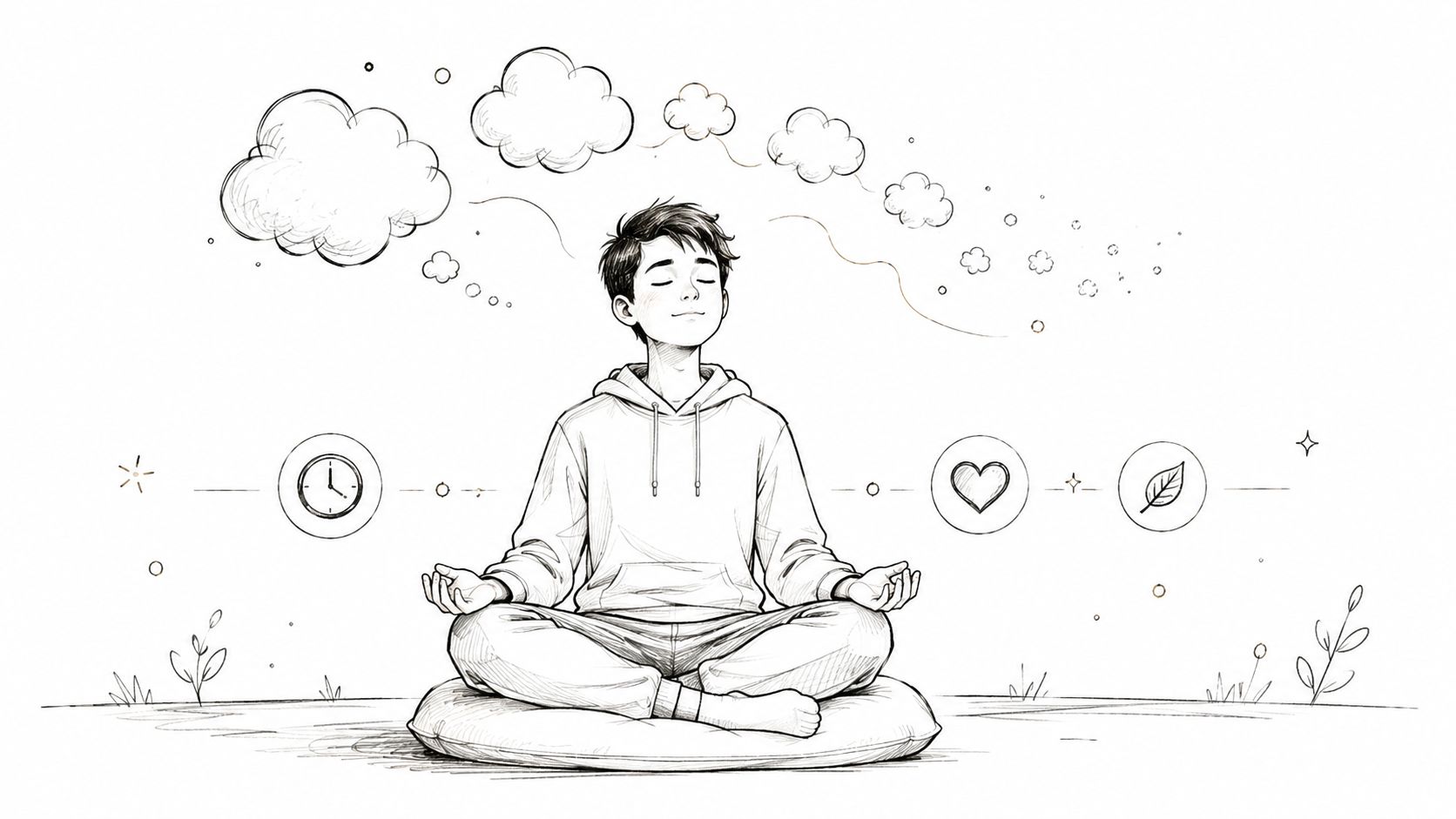
Start with a brief, concrete exercise rather than a formal meditation. Ask a teen to feel both feet on the floor, name several sounds, and describe one breath without judging it. A child can identify things they see, feel, hear, smell, and taste. A young adult with social anxiety might say, “I'm noticing nervousness,” then continue attending an event because connection matters.
The useful question is, “What does anxiety keep taking away?” The answer points toward a valued action.
- Use accessible language: “Thoughts are like clouds moving across the sky” may be easier for a child than an abstract explanation.
- Offer choice: Walking, listening to music, coloring, or noticing sensations may suit a reluctant teen better than sitting still.
- Clarify values: Ask whether friendships, sports, learning, creativity, or independence deserve more room.
- Separate acceptance from resignation: Acceptance allows an internal experience to be present while the person chooses a meaningful response.
The mind will wander. Gently returning attention is the practice, not evidence of failure. Families should also avoid turning mindfulness into another performance demand or a requirement the child must complete perfectly.
The best activity can differ across young people. A 2026 meta-analysis and network meta-analysis summarized in PubMed found that exercise reduced anxiety in children and adolescents, with larger benefits at moderate and high intensities. In one network comparison, Acceptance and Commitment Therapy ranked ahead of CBT, Virtual Reality Exposure Therapy, and Physical Exercise. Because the evidence quality was low and imprecise, fit matters more than ranking. Choose an activity the young person can understand, repeat, and connect with daily life.
Parents can track stress routines with Pretty Progress by recording the activity, the situation, and what the young person did next. If practice increases distress, intensifies panic, or becomes rigid, pause and consult a qualified mental health professional.
4. Progressive Muscle Relaxation
Progressive muscle relaxation, or PMR, targets the body side of anxiety. The child or teen briefly tenses and releases muscle groups, learning to recognize the difference between bracing and relaxing. That body awareness can be useful before a test, during a bedtime routine, or ahead of a presentation.
Teach the exercise when the young person is calm. Use concrete language for children, such as “squeeze your hands like you're holding lemons, then let them become soft.” Move through hands, arms, shoulders, face, stomach, and legs, while avoiding painful tension. A shorter version can focus only on the hands, shoulders, and jaw when the person needs a discreet strategy in public.
A parent can practice alongside the child rather than monitoring from the doorway. That reduces the sense that the child is being treated as a problem and makes the exercise a shared regulation skill. An audio recording of a familiar script may also help, especially when the child has difficulty remembering each step.
“Relaxation is a skill to practice, not a button that must work instantly.”
PMR can support sleep, but it shouldn't become a rigid condition for falling asleep. If a teen says, “I can't sleep unless I complete the routine perfectly,” shorten the routine and make flexibility part of the plan. Some people also feel uncomfortable focusing on body sensations, particularly after trauma or during panic. In that case, grounding through the room, gentle movement, or clinician-guided alternatives may be a better entry point.
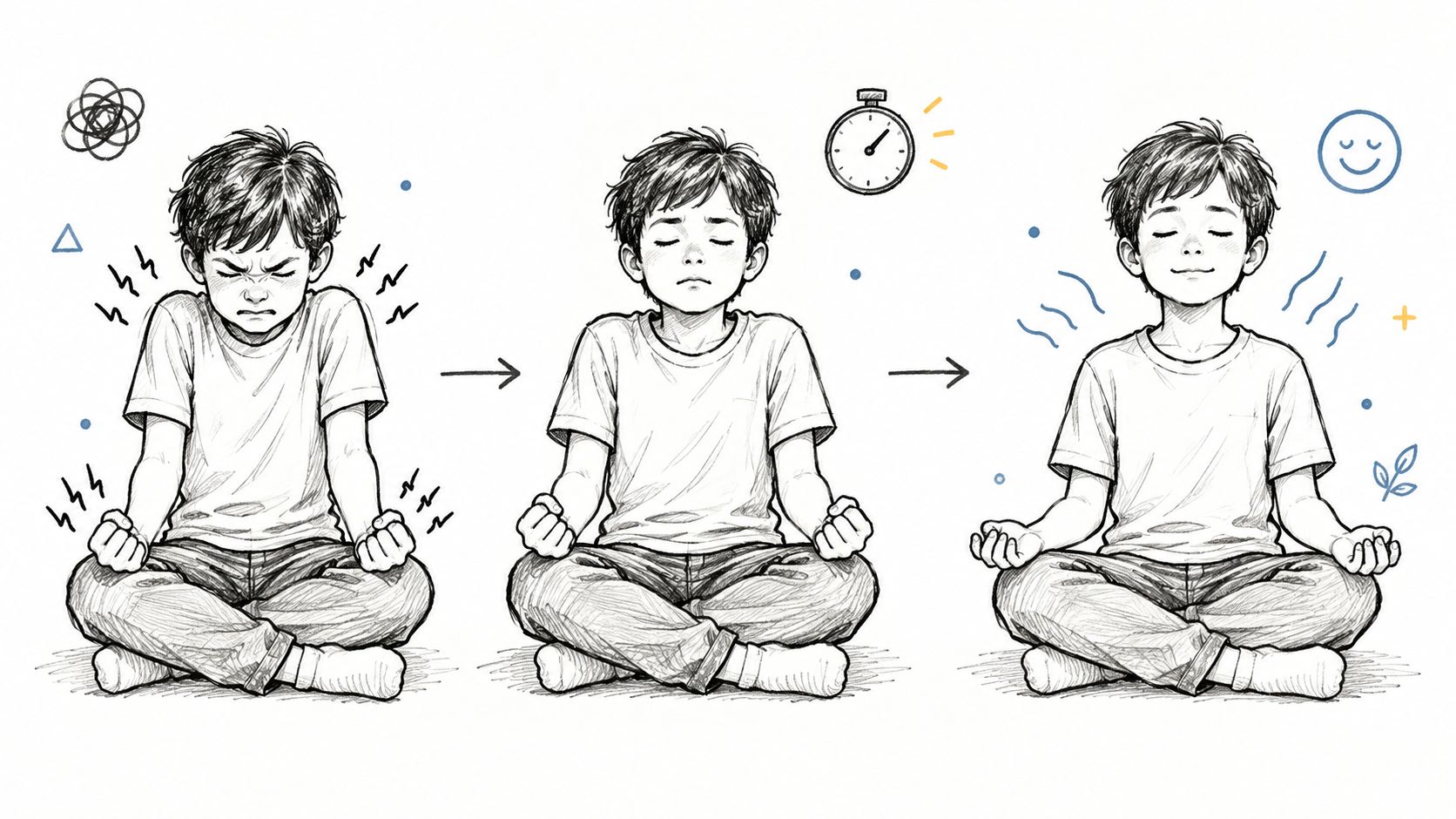
After practicing the sequence at home, a young person can use a quick hand-and-shoulder release before a presentation or while waiting for an appointment.
5. Behavioral Activation
Anxiety can shrink a teenager's daily life. Sports, invitations, creative interests, and schoolwork gradually disappear because avoidance brings quick relief. Over time, withdrawal also removes chances to experience pleasure, competence, connection, and confidence.
Behavioral activation targets the avoidance part of the anxiety cycle. Ask, “What matters to you, even when anxiety makes it difficult?” Choose one activity, then define the smallest action that can happen on a particular day and time. For basketball, that might mean packing shoes and attending the first ten minutes. For music, it could mean opening the instrument case and playing one song.
The target is completed action, not an immediate mood lift. A teen who is anxious, depressed, sleep-deprived, or managing ADHD may need a smaller starting point than an adult expects. “Join a club” can become reading its information, attending briefly, and greeting one person over separate attempts.
Build the plan around four useful categories:
- Pleasure: music, games, art, or another enjoyable interest.
- Accomplishment: one school task, household job, or practice goal.
- Connection: a message to a friend, time with family, or supported peer contact.
- Meaning: volunteering, helping someone, or an activity linked to personal values.
Reduce practical barriers by arranging transport, clothing, supplies, reminders, and an agreed exit option. A parent can drive, attend the first practice, or help prepare, then gradually step back. Track attempts on a calendar or brief note, focusing on participation rather than grades.
A 2025 meta-analysis found a small but statistically reliable benefit from school-based resilience programs. A 2025 review of school-based psycho-educational programs examined CBT, mindfulness, and physical-activity approaches and reported reductions in sub-clinical anxiety and stress among teenagers. These findings support flexible, school-connected choices, not pressure to place every teen in one standard program. If avoidance is severe, attendance is falling, or depression and safety concerns are present, involve a qualified clinician.
6. Deep Breathing and Diaphragmatic Breathing Techniques
Breathing exercises are useful when anxiety is loud in the body. A child may notice a racing heart before speaking in class. A teen may feel tight-chested during panic. A young adult may want a discreet strategy before an interview or difficult conversation.
Teach breathing outside the crisis. Have the person place one hand on the belly and notice whether the lower hand moves gently during the inhale. A simple pattern is to inhale for four counts, pause for four, exhale for four, and pause for four. Children may prefer “smell the flowers, blow out the candles,” while older teens may use quiet diaphragmatic breathing without counting.
Keep the strategy flexible
The goal isn't to force a particular breathing ratio or create a perfect calm state. Counting can make some people more anxious, and deep breaths may increase discomfort for someone who is already over-breathing during panic. Use a softer, slower exhale, return to ordinary breathing, or shift to sensory grounding if the exercise feels activating.
Try a brief daily practice during a neutral moment, such as after brushing teeth or before homework. Then rehearse the same skill before a mildly stressful task. A child who practices only during a full panic episode may conclude that breathing “doesn't work” because the body is already highly activated.
Breathing can lower immediate distress, but it doesn't address the fear that causes a teen to avoid school, refuse social contact, or repeat a compulsion. Pair it with CBT, exposure, sleep support, or caregiver coaching when those patterns are present.
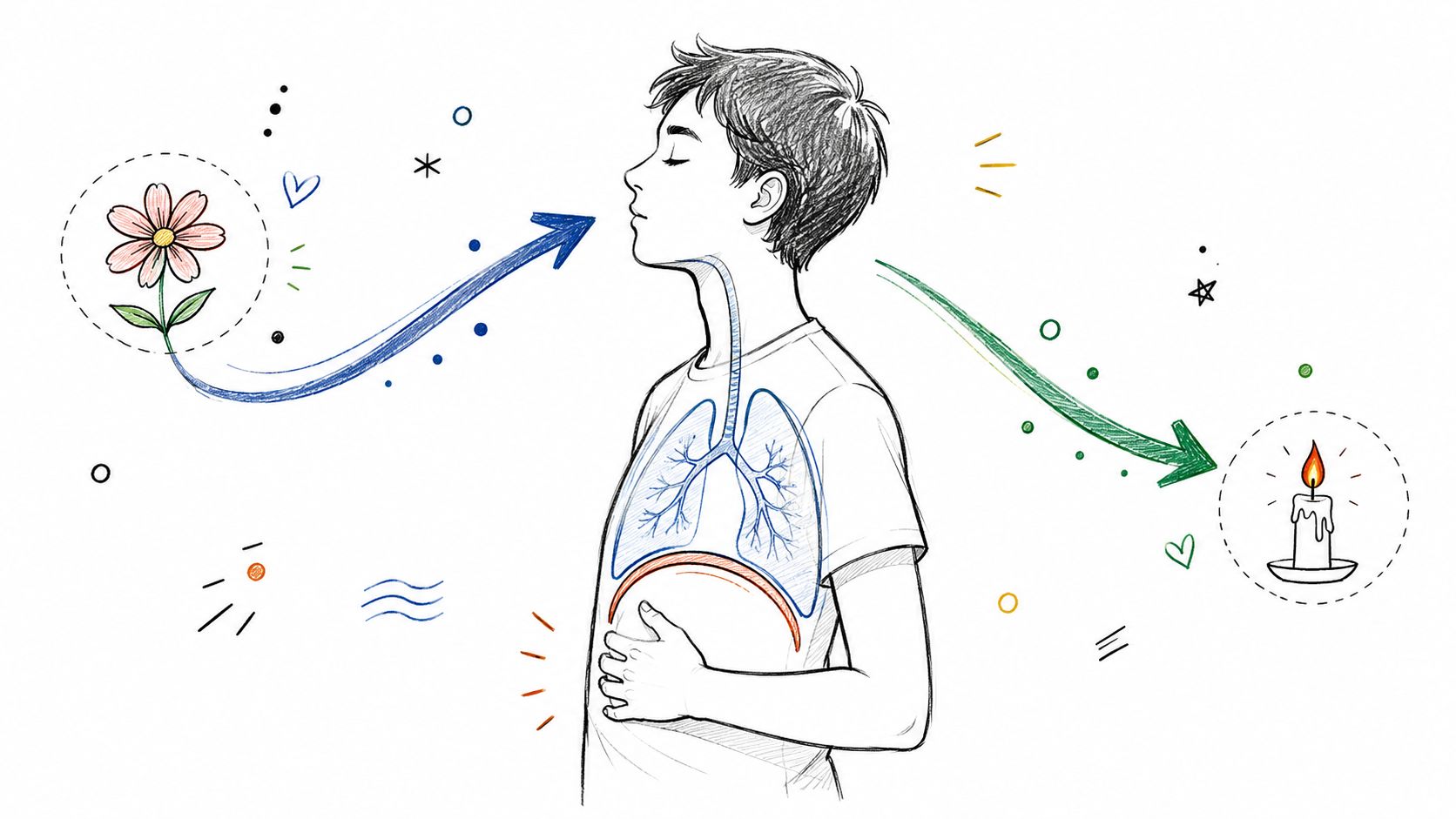
7. Parent Training and Coaching for Anxiety Management
A child asks the same safety question before school, and a parent answers each time. Another caregiver checks every assignment, permits staying home, or joins a ritual to end the distress quickly. These responses are understandable, yet they can teach anxiety that the situation is unsafe without parental help.
Parent coaching changes the caregiver's response while respecting the child's fear. Instead of promising that nothing bad will happen, say, “I know this feels scary, and I believe you can take the next step.” Stay nearby for a planned practice, but avoid repeated reassurance or participating in rituals. The target is greater independence, not a perfectly calm child.
Start with one behavior and write down the response plan. Specify what the parent will say, what the child will practice, and how effort will be recognized. Praise approaching the feared situation, using a coping skill, or remaining engaged, rather than rewarding calm alone. For school refusal, align expectations with the treatment team and school so morning decisions do not change according to the child's anxiety.
A useful coaching record includes:
- Name the accommodation: Describe exactly how the caregiver currently responds.
- Choose a replacement: Use validation, a brief coping prompt, or a planned step toward independence.
- Rehearse the wording: Practice responses for bedtime, school drop-off, reassurance requests, and ritual-related moments.
- Expect discomfort: Protest or increased anxiety may occur while the family pattern changes.
- Address caregiver anxiety: A parent's fear can strengthen avoidance, so caregiver support may be needed.
Parents can access practical guidance through Wald Behavioral Health's parent services. Professional coaching is appropriate when anxiety disrupts school, sleep, family routines, or safety, or when caregivers cannot apply the plan consistently without support.
8. Cognitive Restructuring and Thought Challenging
Before a presentation, a teen may think, “If I make one mistake, everyone will judge me.” A younger child might predict, “I'll fail this test and ruin my future.” These thoughts can feel like facts. Cognitive restructuring helps the young person identify the prediction, examine its accuracy, and choose a response that supports useful action.
Begin with one recent situation rather than assigning a generic worksheet. Record the situation, automatic thought, evidence supporting it, evidence that complicates it, and a flexible alternative. For example: “This test matters, but one result will not decide my future. I can prepare and ask for help.” The alternative should be believable, not forced positivity.
Follow the anxiety cycle
Use questions that connect thinking with behavior:
- Name the prediction: What exactly does the young person expect will happen?
- Separate evidence: Which details are facts, and which are feelings or assumptions?
- Check what does not fit: What past experience, alternative explanation, or uncertainty challenges the prediction?
- Use a kinder standard: What would the young person say to a friend in the same situation?
- Choose the next action: What response would support attending class, starting the task, or speaking to someone?
A parent or therapist can ask these questions without arguing about whether the thought is true. The aim is flexibility, not the complete removal of worry. If challenging thoughts becomes repeated reassurance-seeking, shorten the exercise and return to the planned task. Use examples from school, friendships, work, or family life. When anxiety keeps driving avoidance or significantly disrupts daily functioning, professional guidance can help tailor the exercise to the child's developmental level.
9. Sleep Hygiene and Behavioral Sleep Interventions
Bedtime anxiety can become a cycle of checking, delaying, reassurance-seeking, and conflict. The child stays awake because separation or frightening thoughts feel unsafe. The parent remains in the room longer, the child receives temporary relief, and the next night becomes harder.
Start with predictable environmental and behavioral changes. Keep bedtime and wake time consistent, create a wind-down period, reduce stimulating screen use before bed, and move breathing, PMR, reading, or quiet music into the pre-sleep routine. An anxious teen may need a written plan for what to do when worries appear, such as briefly recording the thought for tomorrow and returning attention to a quiet activity.
Make caregiver responses consistent
For younger children, parents may use graduated check-ins or other clinician-guided behavioral sleep methods. Explain the plan in advance and apply it consistently. Resistance can temporarily increase when a familiar accommodation changes, so caregivers need support and clear expectations rather than abandoning the plan after one difficult night.
Check for medical or behavioral contributors, including snoring, restless sleep, medication effects, caffeine, mood changes, and irregular schedules. A developmentally informed sleep therapy resource can help families consider when structured support is appropriate.
Sleep strategies won't resolve every anxiety disorder. If a teen's bedtime worries involve compulsions, trauma-related nightmares, panic, or severe depression, address those concerns directly with a qualified clinician. Better sleep can support daytime coping, but it shouldn't be used to dismiss the underlying problem.
10. Social Skills Training and Peer Interaction Coaching
A teen may rehearse a greeting at home, then freeze when a peer approaches at school. Start by identifying which part of the anxiety cycle is interfering. Fear of judgment points toward anxiety treatment and gradual exposure. Difficulty knowing how to begin, listen, assert a preference, or respond to rejection calls for direct social-skills practice. Many teens need both.
Use brief role-play before real-world practice. A parent or therapist can take the peer's role while the teen practices asking, “Can I sit here?” Afterward, identify one observable skill to repeat, such as facing the speaker, asking a follow-up question, or staying in the conversation for another minute. A young adult might rehearse an introduction for work or college, receive specific feedback, and repeat it in a slightly harder setting.
Progress is measured by participation, not a flawless interaction. Approaching someone, remaining present, recovering from an awkward pause, or completing a planned step all count. Treating every uncomfortable moment as failure can strengthen avoidance, while reviewing what happened helps the teen adjust without self-criticism.
Choose one starting point:
- Familiar person: Send a message, say hello, or ask a simple question.
- Less familiar peer: Have a short conversation in a shared setting.
- Small group: Make one comment or ask one question.
- Assertiveness: State a preference, request help, or disagree respectfully.
- Rejection recovery: Notice the feeling, use a coping statement, and continue the planned activity.
Parents can arrange realistic opportunities without scripting every word. Group coaching may provide useful rehearsal, but fear, avoidance, or safety behaviors require exposure-based anxiety treatment as well. A clinician should assess persistent isolation, bullying, developmental differences, or distress that prevents school, work, or ordinary relationships.
10 Anxiety Therapy Activities: Quick Comparison
| Intervention | Implementation complexity 🔄 | Time & resource requirements ⚡ | Expected outcomes ⭐📊 | Ideal use cases | Key advantages 💡 | |---|---:|---:|---|---|---| | Cognitive Behavioral Therapy (CBT) for Anxiety | Moderate, High, structured protocol; needs trained therapist | Moderate, typically 12, 20 sessions, homework, therapist training | High, first‑line, robust symptom reduction across anxiety disorders | GAD, social anxiety, panic; adaptable for children/adolescents | Skill-based, short-term, evidence‑backed; promotes independent coping | | Exposure-Based Interventions (ERP / Graded Exposure) | High, detailed hierarchies, distress management required | Moderate, High, repeated sessions, therapist expertise, parental support | Very High, gold standard for OCD/phobias; rapid, durable change | OCD, specific phobias, avoidance-driven social anxiety, panic | Directly targets avoidance; measurable progress; lasting habituation | | Mindfulness & Acceptance-Based Interventions | Low, Moderate, practice + values work; less directive | Low, teachable in groups/individually; requires home practice | Moderate, improves regulation, reduces meta‑anxiety; complements CBT | General anxiety, residual symptoms, clients preferring acceptance | Enhances distress tolerance; values‑driven action; portable practice | | Progressive Muscle Relaxation (PMR) | Low, stepwise, concrete procedure | Low, brief training, minimal resources, audio scripts helpful | Moderate, reliable physical relaxation; short‑term symptom relief | Somatic anxiety, test nerves, bedtime routine, young children | Quick, concrete, easy for children; produces measurable relaxation | | Behavioral Activation | Low, Moderate, activity scheduling and value alignment | Low, planning, monitoring, family involvement possible | Moderate, reduces avoidance, boosts mood and engagement | Avoidance-driven anxiety, comorbid low mood, social withdrawal | Action‑oriented, measurable gains; restores routine and mastery | | Deep / Diaphragmatic Breathing Techniques | Very Low, simple, teachable in minutes | Very Low, no equipment; practiceable anywhere | Low, Moderate, immediate physiological relief; temporary effect | Acute anxiety episodes, panic onset, public/social situations | Instant, discreet, universally applicable; first‑line coping tool | | Parent Training & Coaching for Anxiety Management | Moderate, requires coordination and behavior change | Moderate, multiple parent sessions, time and follow‑through | High, amplifies child treatment outcomes and maintenance | Pediatric anxiety, separation anxiety, school refusal, OCD rituals | Alters home maintenance factors; empowers caregivers; improves consistency | | Cognitive Restructuring & Thought Challenging | Moderate, abstract skill development, Socratic method | Moderate, therapist guidance, worksheets, repeated practice | High, addresses cognitive drivers; durable cognitive change | Adolescents/adults with cognitive distortions, GAD, social anxiety | Builds mental flexibility and long‑term self‑help skills | | Sleep Hygiene & Behavioral Sleep Interventions | Low, Moderate, routines + environmental changes; consistency needed | Low, low cost; parent involvement; 2, 4 weeks to change patterns | Moderate, High, improves sleep, daytime functioning, supports anxiety reduction | Sleep‑related anxiety, insomnia, separation anxiety affecting sleep | Broad health and functional benefits; family‑wide, inexpensive | | Social Skills Training & Peer Interaction Coaching | Moderate, assessment, role‑play, graded practice; group management | Moderate, group or individual sessions, peer practice opportunities | Moderate, High, improves competence and reduces social avoidance | Social anxiety with skill deficits, shy youth, school reintegration | Builds real‑world competence via rehearsal; provides peer feedback |
Turn One Exercise Into a Supportive Plan
Choose the activity by the pattern you can see today. Breathing or PMR fits body tension, shaking, jaw tightness, or physical restlessness. Mindfulness or grounding fits attention that keeps spiraling into future scenarios. Thought challenging fits a clear catastrophic prediction. Exposure fits avoidance, reassurance-seeking, or rituals. Behavioral activation fits withdrawal and low motivation. Sleep strategies fit bedtime resistance and nighttime worry. Parent coaching fits family accommodation, repeated reassurance, or conflict around independence.
Start with the smallest useful version. A teen might practice one breathing cycle before homework, write one balanced response to a worry, or remain in a social situation for a planned brief period. A parent might change one reassurance response or follow one consistent bedtime step. The activity should be realistic enough to repeat, not so ambitious that missing it becomes another reason for self-criticism.
Record what happened in plain language. Note the situation, the activity, what the young person did, and what changed afterward. Don't judge the plan by one attempt. Review the pattern over time with the child, teen, caregiver, or therapist. An exercise may need to be shortened, made more concrete, paired with another skill, or replaced because it doesn't fit the person's age, preferences, symptoms, or setting.
The most effective choice also depends on intensity and context. Exercise may be a useful addition for some young people, especially when moderate or higher intensity feels accessible, while acceptance-based work may suit someone who is exhausted from fighting every anxious thought. For social anxiety, structured and exposure-oriented activities may help, but families shouldn't assume that a general fitness activity alone will address clinically significant avoidance.
Seek professional guidance when anxiety produces persistent avoidance, panic, compulsions, school refusal, major sleep disruption, or interference with relationships and daily responsibilities. A clinician can distinguish anxiety from related concerns such as depression, ADHD, trauma responses, medical issues, or sleep disorders, then create a plan that includes the young person and caregivers as appropriate.
Wald Behavioral Health provides developmentally informed anxiety therapy for children, adolescents, young adults, and families. Care may include CBT, exposure practice, parent guidance, and age-appropriate individual therapy, with in-person appointments in Coral Gables and telehealth across Florida, Maryland, and PSYPACT-participating states. Families can use the free 15-minute consultation to discuss needs, fit, and scheduling.
---
Wald Behavioral Health offers evidence-based anxiety therapy, parent guidance, and developmentally matched support for children, teens, young adults, and families. Visit Wald Behavioral Health to learn about in-person care in Coral Gables, telehealth availability, and the free 15-minute consultation.
Questions about your child or teen?
Dr. Wald offers a free 15 minute consultation to talk through what you are seeing and whether the practice is a good fit.
Free 15 Minute Consultation